Herding: Leash Training Goats and Other Hands-On Techniques
Reading Time: 5 minutes
In Parts 1 and 2, we covered hands-free herding techniques using positional strategies and structural tools to guide goat movement effectively. Yet, there are moments when a hands-on approach becomes necessary — particularly to lead or move an individual goat. Many people prefer leash training goats using collars (or halters to reduce neck pressure) for this purpose. At Kopf Canyon Ranch, however, we also rely on horn leads for our large herd of horned goats — simply because horns are always available when we need them.
Leash Training
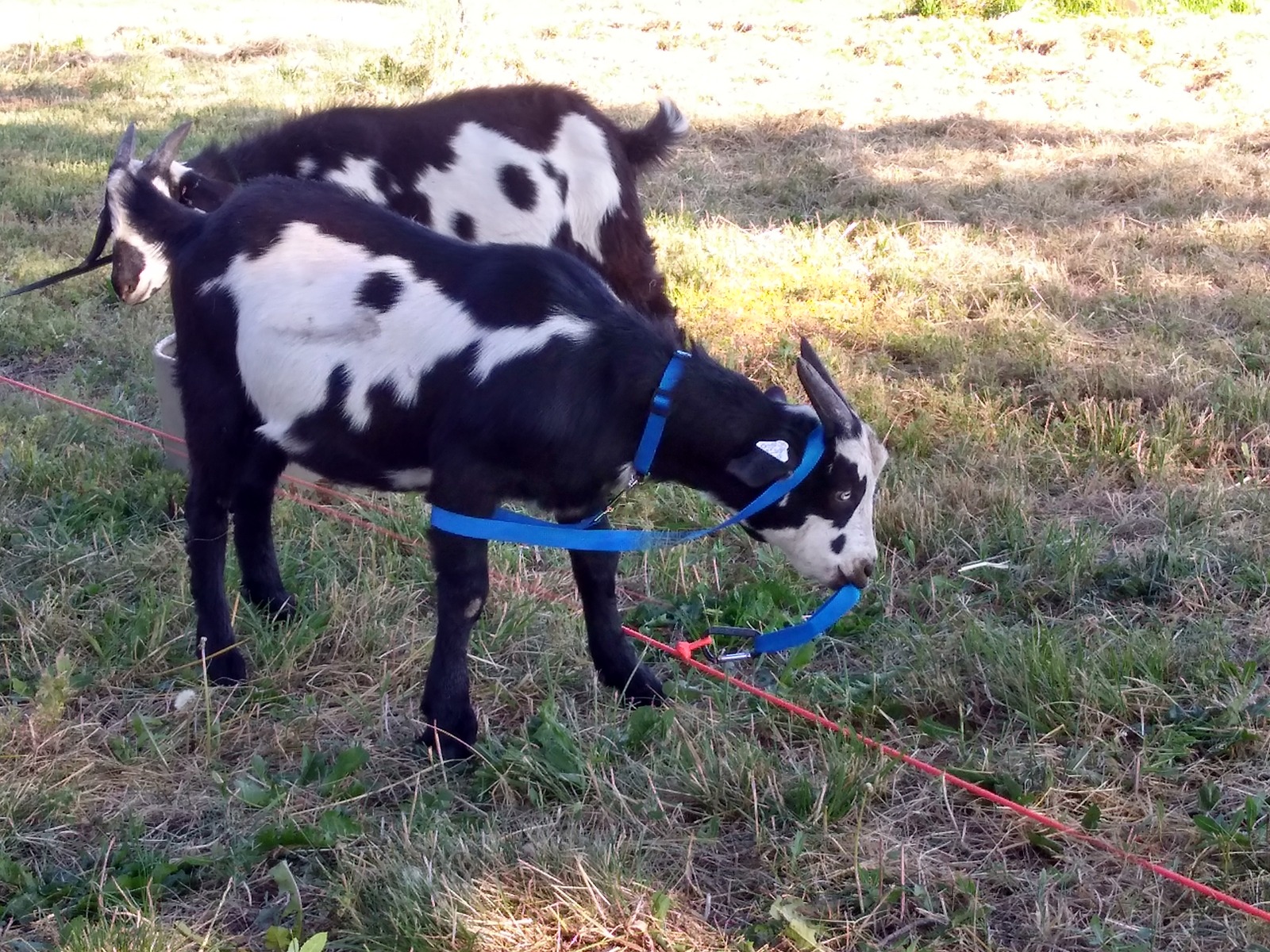
Understanding goat behavior as prey animals is critical to building trust. Because leash training goats restricts their natural movement, goats may find it unpleasant. To make the process less stressful, we allow the goats to train themselves. For this, we use a method known as “low-lining,” with a variation called “high-lining.”
A low-line is exactly what it sounds like — a long rope secured to the ground. A high-line is an aerial version. Each goat wears a collar and leash, which is clipped to a carabiner knotted onto the line. The knots are carefully spaced to prevent tangling with other goats or nearby objects, even when the leashes are fully extended. To make the setup inviting, we place food and water within comfortable reach at full extension of the leash. By training several goats at once, we take advantage of their herd instincts as they watch and learn from each other.
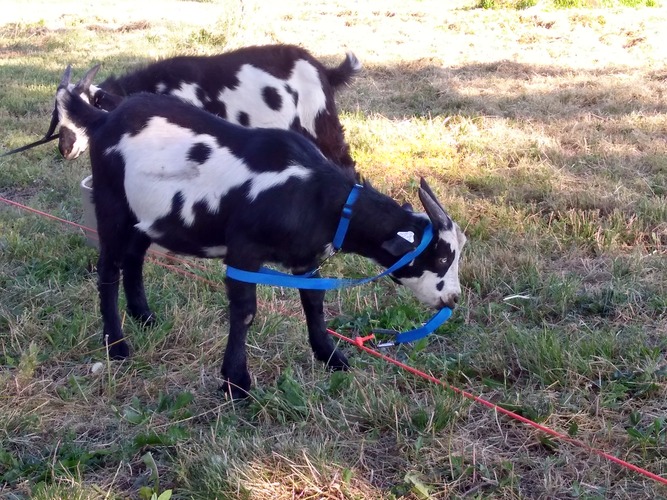
Supervision is essential when tethering goats to ensure their safety. During the training process, some goats may initially struggle against the leash or become briefly entangled. This is natural. Allow the goat an opportunity to disentangle itself, if possible. However, be ready to step in if the entanglement becomes a safety risk. While some goats adjust quickly, others require several sessions to learn how to stay untangled and respect the leash’s limits.
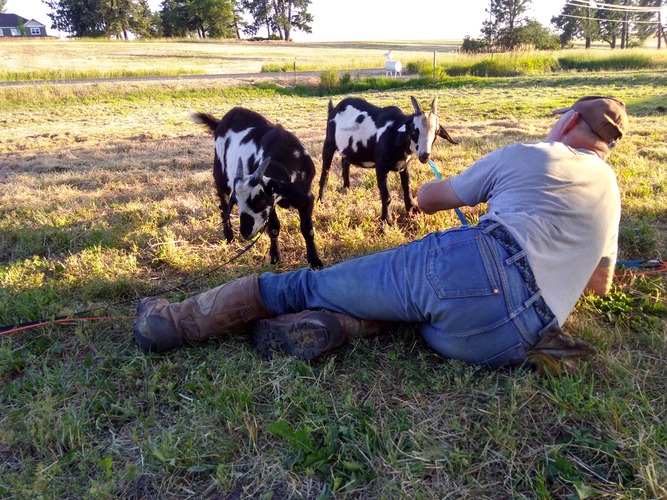
Once a goat consistently respects the leash, we practice applying outside pressure from the pivot point on the lowline. By gently pulling on the leash and holding steady until the goat steps toward us, we help them associate moving toward the pressure — instead of pulling against it — with reward. Keep practicing until they respond by moving and not resisting. Once this response becomes consistent, we graduate the goat from the low-line to walking on a leash. If a goat struggles to respect resistance during walks, we return them to the low-line for more practice. Importantly, the handler is never the “enforcer” in the goat’s mind — it’s the leash itself setting the boundary.
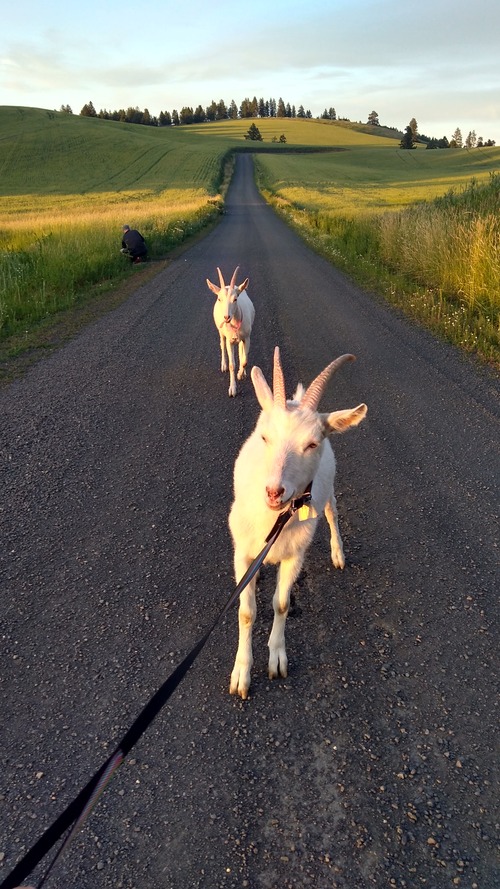
Photo credit: Karen Kopf
Horn Leading
In our herd, horn leads are critical. We don’t have leashes and collars readily available on the canyon. While some believe that handling a goat’s horns encourages aggression, our experience has shown otherwise. By leading with the horns, our goats understand we can catch them and guide their movement, and rarely present their horns defensively. However, don’t try to lead a goat by the horns if it hasn’t been properly trained for it first.
Horn lead training begins early, before the horns are fully grown, using a head lead technique. With one hand under the jaw to pull forward and the other behind the head, we cup the goat’s head firmly. As the horns develop, we begin to wrap our fingers around them without pressure, but continue pushing with the palm from the back of the head to maintain control.
A critical note about horns:
Goat horns aren’t fused securely to the skull until the goat is approximately 1½ years old. Immature horns are loose, fragile, and can break off, resulting in a serious emergency. Never apply pressure or pull on the horns of a young goat. Once the horns are fully fused, they can be used to guide the goat effectively, though pulling is rarely necessary due to prior training. We’ve never broken a horn using them to lead. However, if using this method, please be familiar with horn injuries and first aid.
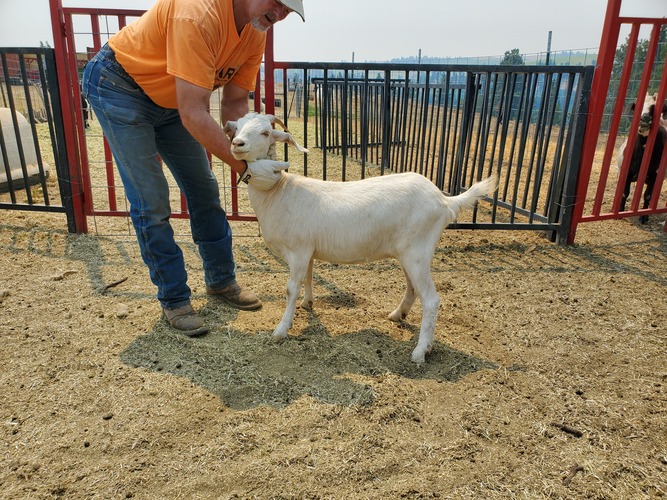
Photo credit: Karen Kopf
Moving Resistant Goats (Balance and Tail Techniques)
When walking, if they plant their feet, don’t pull. Walk into them to get them moving again, or in a circle to shift their balance, so they need to take steps. If additional assistance is available, a second person can follow and encourage forward motion. If the goat remains reluctant to move, the second person can gently lift its tail to encourage it to move. Do not drag the goat by the tail or lift forcibly — a painful break can result. As with leash training goats, when the goat steps forward, remove the pressure on its tail as a reward.
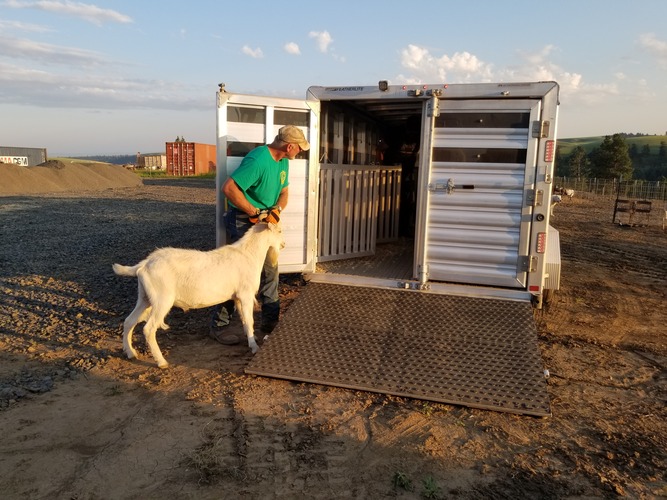
Photo credit: Karen Kopf
Catch and Release Training
In Hands-Free Goat Herding Part 2: Structural Strategies (Goat Journal July 15, 2025, digital issue), we mentioned that we never chase goats to catch them. Instead, we use a catch pen to confine them to a smaller space and employ positional pressure to encourage them to move toward us. For prey animals, being caught while moving toward the handler is far less stressful than being caught from behind. To ease this process, we practice “catch and release” with young goats so they learn that being caught is temporary and painless. Allow them to relax before releasing or moving them. Practice catching, relaxing, and releasing frequently.
Building Trust With Humane Handling
With hands-on techniques complementing our hands-free herding methods, we aim to maintain trust while ensuring safety and efficiency for both the goats and ourselves. Combining leash training and horn training with humane handling practices strengthens our bond with the herd, fostering a cooperative relationship that benefits everyone involved. Remember, goats have short memories and shorter attention spans when it comes to training, but long memories when it comes to fear. There’s no need to punish or treat goats harshly. Frequency, gentleness, and rewards are key.
Karen Kopf and her husband, Dale, own Kopf Canyon Ranch in Troy, Idaho. They raise Kiko goats, enjoy “goating” together, and helping others goat. You can learn more about them at Kopf Canyon Ranch on Facebook or KikoGoats.org
Originally published in the October 15, 2025 digital issue of Goat Journal.