Hands-Free Goat Herding Part 2: Structural Strategies
Reading Time: 5 minutes
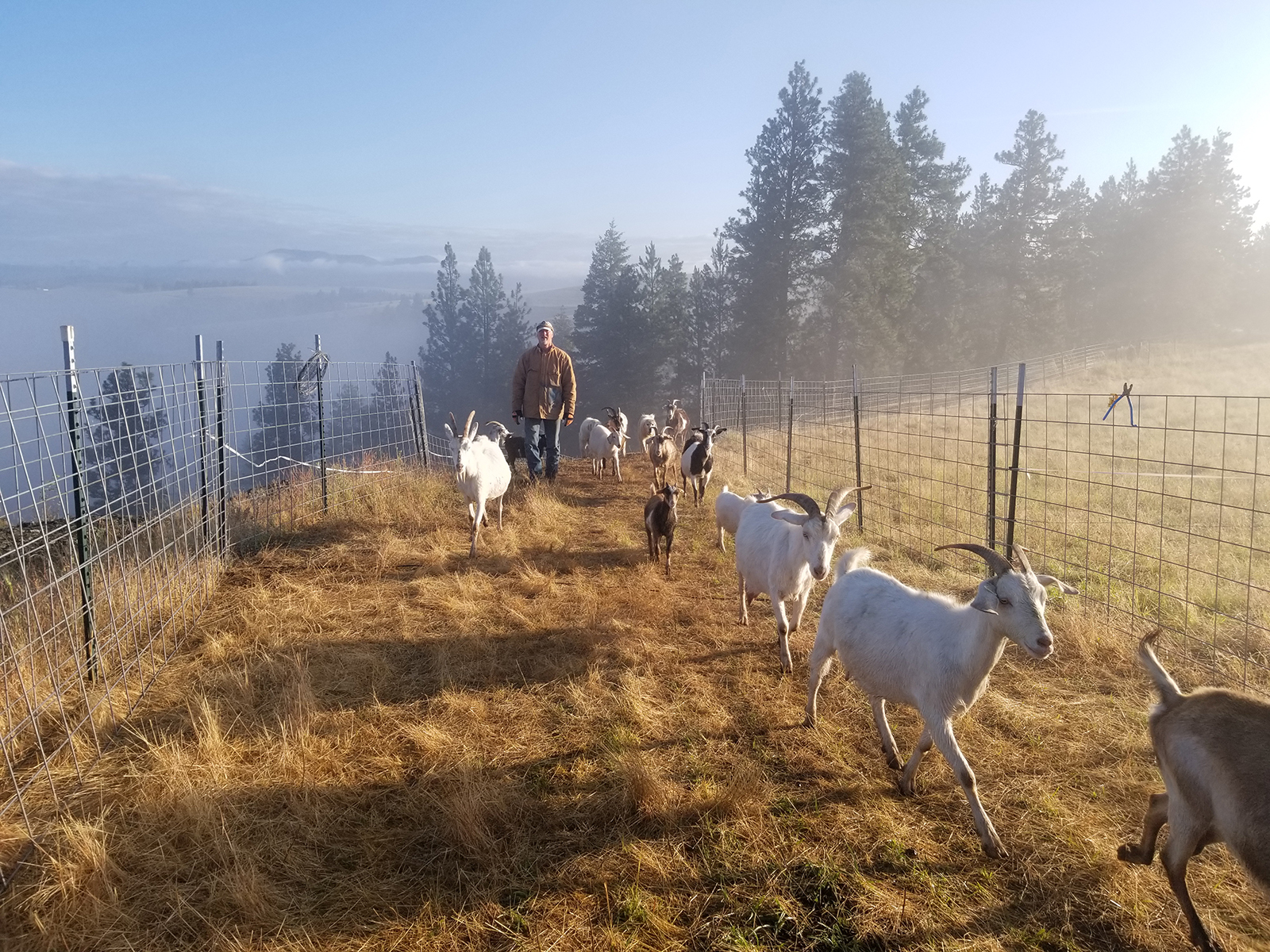
When it comes to movement, goats are guided by distinct natural preferences. Evolutionary survival mechanisms shape these tendencies. As prey animals, they instinctively move from dark to light, narrow to wide, and low to high. At Kopf Canyon Ranch, our structural herding strategies provide us with valuable support when herding goats and it’s necessary to move our herd against these preferences. By creating the right physical environment, we can apply structural pressure to encourage cooperation. In so doing, we reduce stress and effort, and increase safety for the goats and for us.
Funneling or Crowding
Considering these natural preferences, the cornerstone of effective structural movement is a concept called funneling or crowding. This technique capitalizes on goats’ natural inclination to escape pressure from the opposite direction. Effective funneling requires thoughtful design and use of structures, such as gates, pens, alleys, and chutes, to guide and restrict movement as needed.
Catch Pens
One essential structural element for any goat owner is a catch pen. A catch pen is a smaller, enclosed area where the herd can be gathered for handling. It serves as a controlled environment to simplify sorting. Moving goats from a large pasture into a catch pen not only makes handling less stressful but also safer and more efficient.
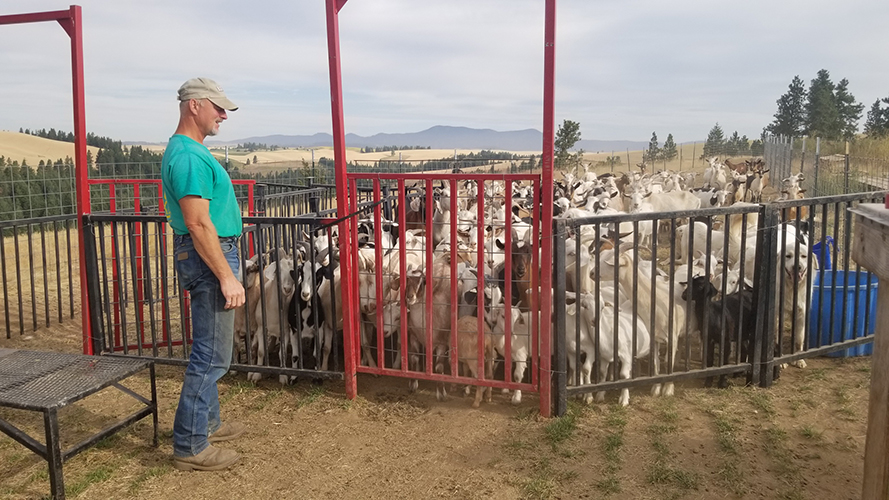
When designing a catch pen for goat herding, consider enclosing goats’ basic necessities — food, water, and shelter — within the pen. This creates a space they’re familiar with and naturally inclined to enter, making it easier to confine them when needed. However, caution is necessary when placing water sources inside the catch pen. Large open water troughs, for example, can pose a risk. Panicked goats may accidentally jump into the trough, leading to potential injuries. For this reason, we prefer to position large troughs outside of the catch area.
Swing Panels or Gates
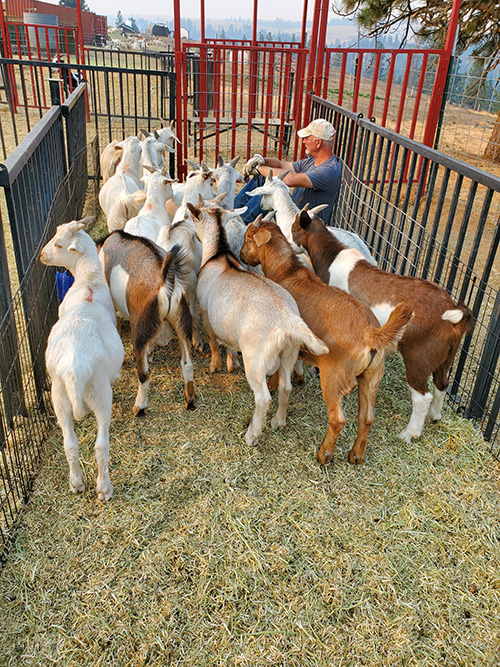
For larger herds or prolonged handling periods, we divide our catch pen into smaller sections using swing panels or gates. These subdivisions can be used to reduce obstacles, crowd the goats further, and limit their movement, making them easier to catch. For us, this is especially useful during routine evaluations or sorting tasks, which require handling hundreds of goats over several days. By creating smaller spaces within the pen, we can work with manageable groups at a time, minimizing stress for both the goats and handlers.
Gate placement is another crucial aspect of structural design for goat herding. Gates should be strategically positioned to encourage natural movement. Goats tend to move more willingly toward openings located in corners, as these configurations create a natural funnel effect. The fences on either side of the corner apply pressure, guiding the herd toward the gate. Conversely, gates placed in the middle of a fence line don’t provide this funneling effect, giving the herd more opportunities to scatter or reverse direction. To move a herd through a centered gate requires more resources — handlers, swing panels, or dogs — to achieve the funnel effect. A well-placed gate can significantly simplify the process of moving goats from one area to another.
Alleys and Chutes
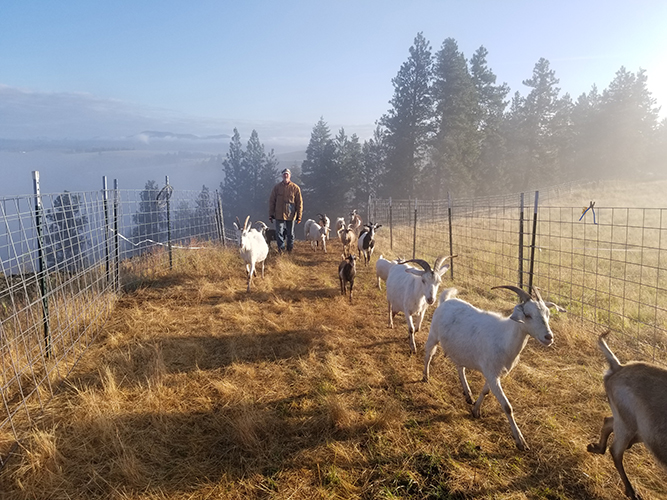
To further streamline goat movement when goat herding, we rely on additional structural tools, such as alleys and chutes. An alley, typically a narrow pathway enclosed by fencing, is used to direct the herd between pastures, pens, or workstations. In our experience, the ideal width for an alley is no wider than a person with outstretched arms. This ensures the handler can manage the herd effectively without needing additional assistance. Wider alleys may allow goats to break away or reverse direction, complicating the process.
For more specialized tasks, alleys can be further narrowed into chutes. A chute is a highly confined space, typically just wide enough for a single goat, that restricts movement and ensures the animal can only move forward. Chutes are particularly useful for handling individual goats, as they allow for precise control and reduce the risk of injury. They can be equipped with gates to divide the space into sections, creating multiple workstations along the chute. This setup is ideal for tasks such as weighing, vaccinating, marking, or administering foot baths. For example, weighing a goat in a chute becomes a simple task, as the animal has no option but to stand on the scale.
Trailers
Structural strategies are not only valuable for regular management tasks but also for more specialized scenarios, such as loading goats into trailers. Transporting goats to shows, grazing allotments, or new pastures often involves moving them into an unfamiliar environment, like a trailer. For many goats, this can be a stressful experience, especially if they’ve never encountered a trailer before. If the goats are already accustomed to a system of alleys and chutes, this unfamiliar process can be made significantly less stressful. The same structural principles apply: Create a funnel leading into the trailer, use gates to restrict movement, and provide an incentive, such as food or straw, to encourage the goats to enter. We find this approach is far less chaotic than attempting to load directly from a pen or pasture, which often results in a “goat rodeo.”
Sorting and Separating
In addition to simplifying movement, structural strategies play a crucial role in sorting and separating goats. Multiple gates leading from a catch pen to different pastures or pens allow us to efficiently separate our herd based on specific criteria, such as health checks, breeding assignments, or shipping groups. This system ensures that the goats can be sorted and managed without unnecessary stress or physical effort.
Mindful Integration
By mindfully integrating structural elements like catch pens, gates, alleys, and chutes when goat herding, we consider our herd’s natural instincts in our goat-handling practices to ensure their safety and simplify movement. These strategies are more than just practical tools — they represent our commitment to humane herdsmanship, considering the welfare of our goats. With effective structural strategies, we not only build a more effective system but also foster a stronger bond of trust with our herd. In our experience, the time and care invested in these methods pay dividends in a calmer, more cooperative herd and a smoother, more rewarding management process.
Karen Kopf and her husband, Dale, own Kopf Canyon Ranch in Troy, Idaho. They raise Kiko goats, enjoy “goating” together, and helping others goat. You can learn more about them at Kopf Canyon Ranch on Facebook or kikogoats.org
Originally published in the July 15, 2025, digital issue of Goat Journal.