Tails from the Trails: A Hike and a Hunt
Reading Time: 11 minutes
It’s early afternoon when we pull into the trailhead, my old Ford pickup lurching to a stop as I shut off the ignition and silence the clattering diesel engine. The goats have been jostled around in the back for the past hour on a washboard dirt road and are grateful to be let out, each one pausing for a long stretch as they jump down from the bed. I tie a few of them out at various attachment points around the truck, then climb onto the roof rack to sort through gear boxes, using the hook from a tow strap as a fishing line to gently drop panniers and saddles to the ground.
For backcountry trips here in Idaho, I’ve found that a pickup with a camper shell is the best way to transport goats and access remote places. Depending on the length of the trip, I’ll load up to 10 full-size goats in the back of my 8-foot bed pickup; but for longer drives, six goats travel much more comfortably. Slider windows with some hog panel covers provide good ventilation without allowing their heads to stick out. There have been a few times when I overestimated the road conditions or encountered a washout or a downed tree, and I was grateful not to have a trailer when backing out of these tough spots for long stretches on treacherous roads.
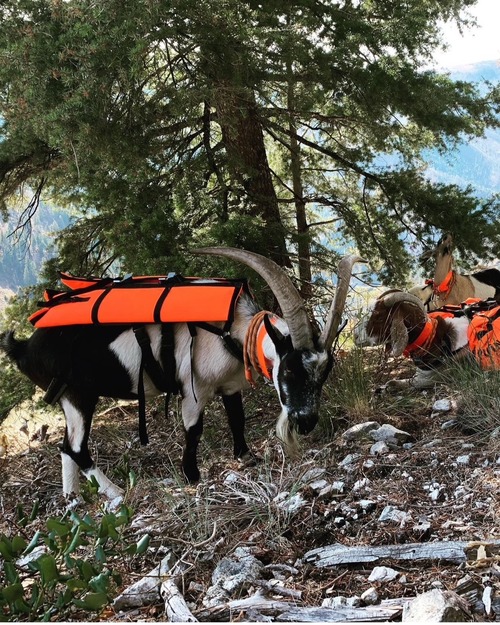
For the final preparations, I lay out the saddles, each one with the goat’s name emblazoned on the side. Our gear has already been balanced in lightweight dry bags that I drop into panniers, a trick used to save time at the trailhead and keep items dry during damp weather. Years of experience have taught me that a damp sleeping bag is a miserable way to spend the night after a long day on the trail.
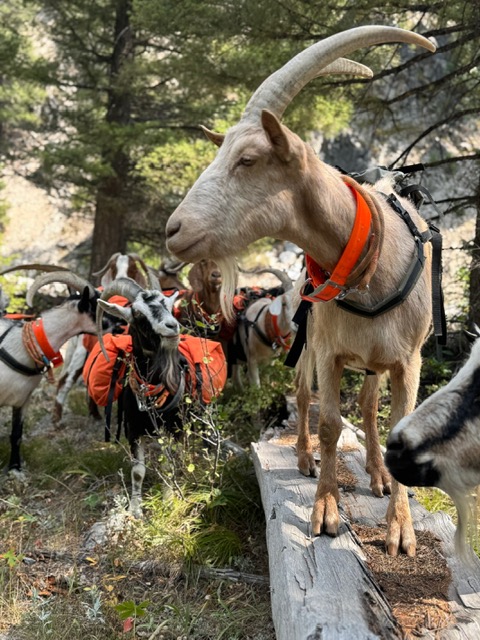
Each goat carries a particular load based on body type and temperament–my larger, longer body types carry the bulky gear loads as they’re able to better manipulate these in the backcountry, especially when plowing through brush. My more compact goats will carry the denser loads, such as food, water, and hunting equipment. My bullies get the heavier loads since it helps to take them down a notch after a few miles, whereas my more mellow guys pack light or even weightless at times and are reserved as spares.
Pack goats can carry loads up to a quarter of their body weight, but I’ve found the sweet spot for these trips is about 10% to 15% of their weight for the rugged terrain we encounter, and my gear loads range in weight from 15 to 25 pounds at most per goat.
Saddling goes quickly, a routine I’ve perfected over hundreds of backcountry adventures. There are 10 with me on this trip, and with each goat jousting for position, it’s pure chaos as we first set out — a tempest of horns and vibrant colored packs swarming around me. Eventually, they settle into their routine positions after the initial excitement has passed, pausing briefly to snack on a trailside delectable before rushing back up into their places. I fight my way to the front of the line, pushing goats off the trail and waving my trekking poles in their face to get them to balk so I can slip past.
Goats are simple when it comes to establishing yourself as their lead, and you’ll find that many of the ways they challenge each other for string position can be used as gentle correction techniques. Pushing them on the side replaces a head butt, waving your hand in their faces replaces sweeping horns at one another, a pinch or swat on the ear is handy for keeping them out of your face during snack breaks, and is one of the earliest corrections they receive from their mothers. On wider roads, I won’t fight for a lead position and just let them lump themselves around me as they please. Sprinting ahead in these situations just gets them running faster alongside you, so I accept my fate of being bumped around by my bigger guys in the back of the string.
Progress is slow as we climb; the lull of the late start mixed with the afternoon heat and steep terrain makes everyone sluggish. At the top of the ridge, we surprise a buck elk, and he vanishes in an instant, barreling down the mountain into the thick underbrush. I pause and notice we’ve wandered into a well-used bedding area with several rubs, both fresh and old. With daylight waning, I select a large, scratched-out elk bed in a stand of trees on the ridge top, and after pushing around the dirt and pine needles with my feet, it’s level enough to place my small backpacking tent.
Once completed, I throw a pair of high lines between the trees and strip off the packs before tying the goats out for the night, being careful to place them next to their buddies so there won’t be any fighting. I position my tent door so I can check on them throughout the night. Exhausted, I make my final camp preparations with a headlamp before turning in.
At daybreak, I hastily repack my camp kit and saddle the goats, releasing them from their line one at a time once I’ve set their gear. I’ve taken to doing this at first light and watching the outskirts of our camp for wildlife. Frequently, I’ve stood up and been met by the gaze of an inquisitive deer inspecting my small herd before sauntering off, or I’ve been startled by the bugle of a bull elk attracted to the rustling of brush as my goats forage around camp. If you move slowly in these situations, they accept you as one of the herd, completely unthreatening and just something odd and out of place in their habitat.
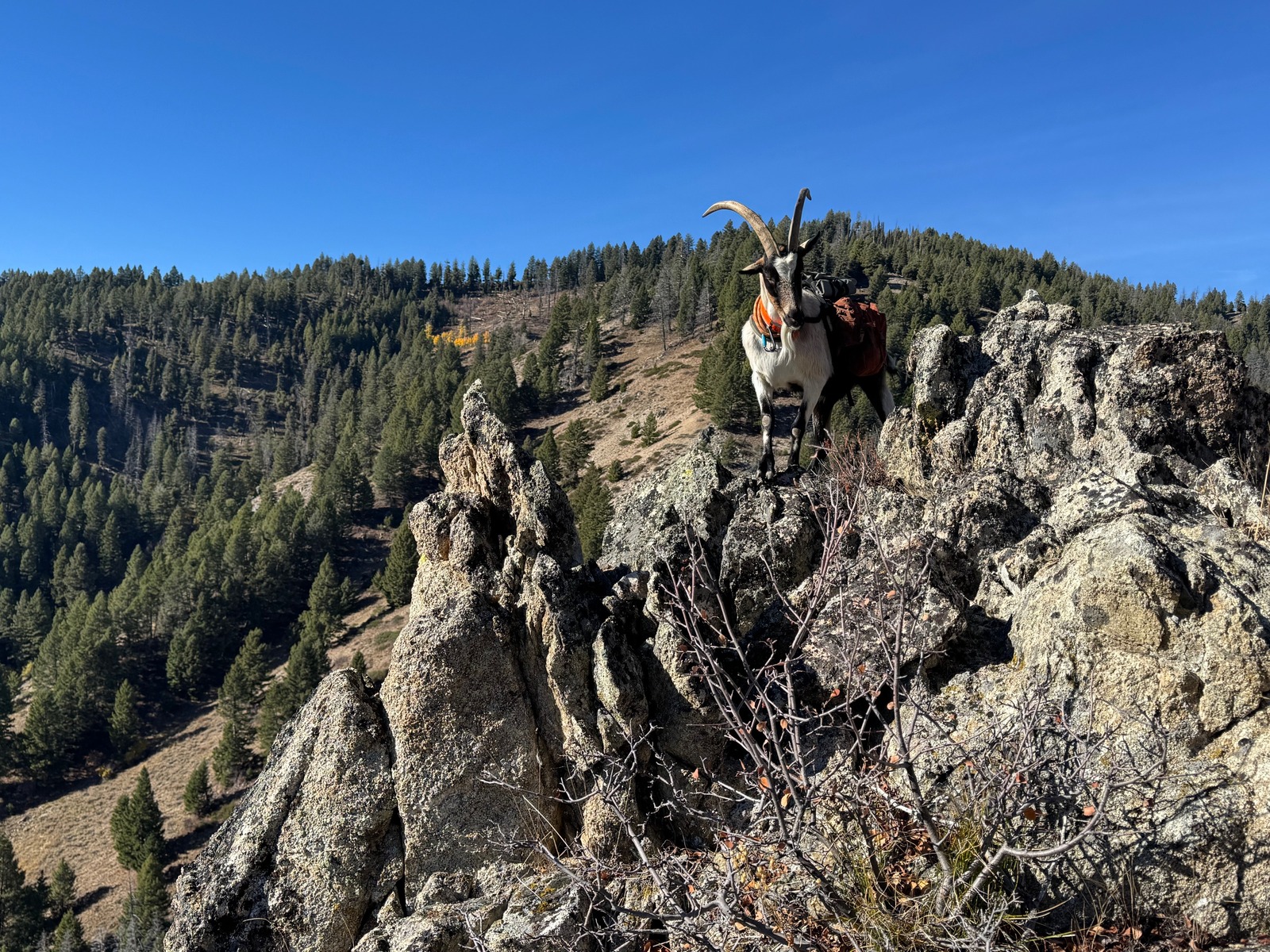
We travel several miles this morning, crossing unknown terrain and overcoming obstacles that challenge us. An old burn has created a logjam of fallen trees and thick undergrowth, and I carefully pick my way through it and find routes the goats can go over and under, occasionally backtracking when we reach a point we can’t move forward. A doe and a fawn stand up suddenly and bounce away, effortlessly weaving through the thick brush. Progress is painfully slow, but the goats plod along.
Finally, we push through the final bushes and reach a jagged ridge with a well-worn elk trail; “elk superhighways,” as I call them, where traveling is much easier. The startling flush of a grouse breaks the monotony of the hike; they live up high this time of year until the cold and snow push them down the mountain. My goats look on inquisitively as I remove the shotgun that’s been carefully stowed away in a pair of scabbards on Titan’s pack that I made for the compact 20-gauge over/under. I quickly assemble it and take down a grouse from a high branch and then dispatch another as it flushes from the undergrowth nearby. I collect my dinner and put them into side pouches on another goat before disassembling my shotgun and stuffing the halves back into their scabbards for safekeeping.
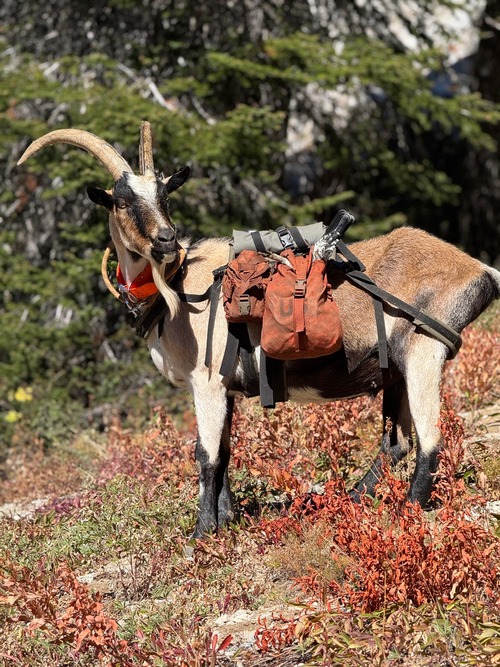
At the end of the ridge, we’re met by a steep descent down to the trail. I take my time weaving through the dense stand of young pine saplings, being mindful to give the goats time to keep up. On these rapid descents, they can linger, and I’ve found it’s best to pause every 20 yards or so and patiently wait for them to catch up, panniers clattering and branches breaking as we barrel our way down the mountain. There’s no sneaking when it comes to descents, which is why I try to set up my final stalks on big game to approach from below or from the side. When moving cautiously, the background noise the goats produce is nothing more than what you’d expect out of a herd of elk.
As we reach the bottom, we connect with a hiking trail, putting several miles behind us from the first night’s ridge. One of the perks of mobile, or “light and fast” hunting like this is that we can wake up on one mountain and be hunting on the next later that day, without being limited to a small radius around camp. To me, the thrill of exploring new areas is just as exciting as chasing game. Often, our trips take us into these unexplored areas, and occasionally the trip will produce a successful hunt, and if not, the adventure is rewarding on its own.
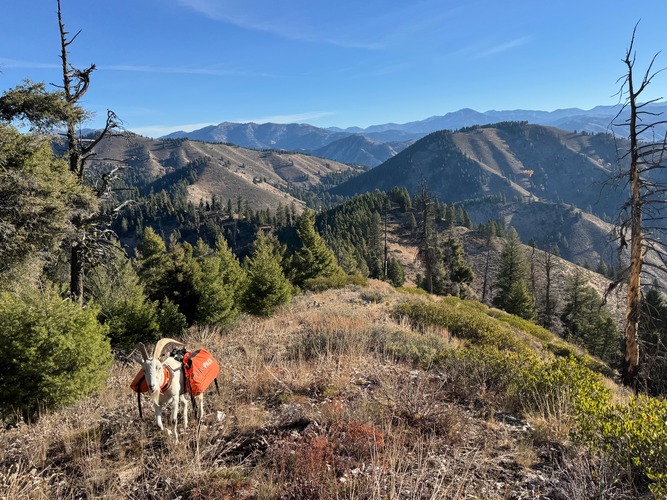
As the afternoon sun wanes, we near our final destination and sharply break from the trail, diving into the thicket along a stream we’ve been following. I remove a set of lightweight tree loppers I carry in my pack, one of the only pieces of equipment I prefer to carry other than my rifle, and methodically begin trimming a trail for us to cross the stream. I carefully inspect the path we are following and cut the branches I think will create the toughest obstacles for the goats to navigate as they patiently wait behind me and forage on the lush grass and leaves.
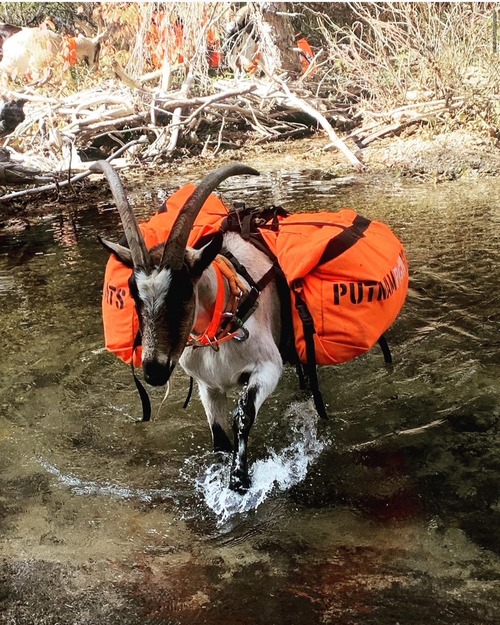
After a few final touches, I plunge knee-deep into the cold stream, my goats brazenly plunging in behind me. Water crossings are nothing new to these guys, and with a little work and some gentle coaxing, they’ll follow you with no hesitation. I’ll grab the more stubborn goats by the collar and anchor myself while pulling them into the stream with me, gently but forcefully. Once their feet are wet, they can be easily led across, or may bound across, anxious to get out as quickly as they can to rejoin their comrades. For wider sections, such as river crossings, I’ll lead a few at a time, tie them out on the opposite bank, then return for the others.
I have my heart set on a goat camp I’d marked on a previous trip, vaguely remembering the sneak path I used to access it. “Sneaker creek,” I think to myself, or maybe “sneaky creek.” I haven’t decided what I’ll call this place yet. We make a steep climb up and over some rocks using a whisper of a deer trail, barely noticeable from the bottom in the loose gravel, before dropping into a small stream and working our way up to camp.
The goats slip and slide to keep up, losing a step for every two they gain. I can tell by their mood that they’ve reached their limit for the day, so I gently coax them along, knowing we don’t have to go much farther. Finally, the trees open and we hit a small familiar meadow, surrounded on three sides by ponderosa pines, with a steep gravel sidehill across the stream. In the grass, there are several depressions where elk have bedded, and once again, I pick an elk bed for myself and scratch it to make my tent spot.
Finally able to relax after a full day of hiking, I enjoy the sweet aroma of pipe tobacco as I assemble my backpacking chair, and the goats lazily graze around me. Titan is perched uncomfortably close over my shoulder to partake in the smoke, breathing it in and sampling the taste of the air with his tongue. Suddenly, he perks up, and his ears focus sharply on a dark mass moving ominously across the hillside. Placing my accoutrements carefully on the ground by my chair, I get up and slowly creep over to my rifle, which is resting against a nearby tree. I take time to steady my aim through the branches, waiting for the right opportunity.
A crack of the rifle interrupts the stillness of the evening, and the dark mass tumbles down the gravel and stops abruptly against a log, preventing it from crashing into the shallow stream. Gathering the goats, I tie them on their highline already set for the evening, then make my way across the stream to inspect the black bear waiting for me. I make quick work of my quarry while the goats nervously watch from 50 yards away, carefully weighing my meat bags with a luggage scale before using the final minutes of daylight to shuttle them back to camp. I repack my pipe and once again shed the exhaustion of the day from my camp chair, lounging and looking at the stars while the goats paw the ground and make their beds for the night.
The first fingers of sunlight begin to touch on the walls of my tent that next morning, and I notice a crispness to the morning air that’s been absent in the previous days of our hunt. I repack my things before changing into my hunting clothes and finally dismantling my tent, shaking the frost from the fly before stuffing it into its bag. I’ve decided to do a brief morning hunt before packing out, so I quickly saddle the goats but leave the camp kit and meat panniers stored safely in the shade for our return.
The goats are grateful for this, shaking off the tiredness of the previous day’s journey and hitting the trail with renewed energy. The goats crowd in behind me as we pick our way further up the drainage. I pause to inspect the openings in the trees before cautiously moving forward. A goat gently nudges my hand with a wet nose as a reassurance that they’re waiting for me to move.
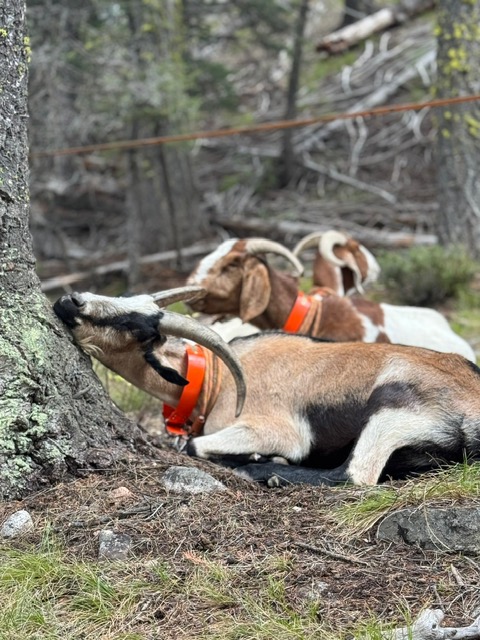
We hit a large junction in the stream with a lush meadow, a spot where I had an encounter with a bull elk a few years previous. Seeing this, I let the goats mill around before continuing, taking in our surroundings and enjoying the stillness of the cool mountain air as the steam begins to rise from the frosted grass. Suddenly, I notice something on the sidehill above us and sit down, a habit I’ve developed so I don’t stick out in a pack of goats.
Slowly, I remove my pack, place it on my lap, and rest my rifle on top to steady it against the extreme uphill angle. The goats continue to mill around me, ravenously eating at the lush grasses. Through my scope, I make a final inspection of the mature mule deer buck, head down, grazing haphazardly as he moves across the hillside. I take careful aim and steady my breathing before gently squeezing the trigger, feeling the rifle’s sharp recoil and the shockwave of sound in the confined space as it washes over me. The shot reverberates in my eardrums for several moments as the emotions of success set in.
Startled by the noise, the goats sprint off a half dozen yards before turning to check on me, and after a gentle reassurance, they resume their morning business while I gather my things and we pick our way carefully up the steep terrain, a near-vertical ascent towards our downed game.
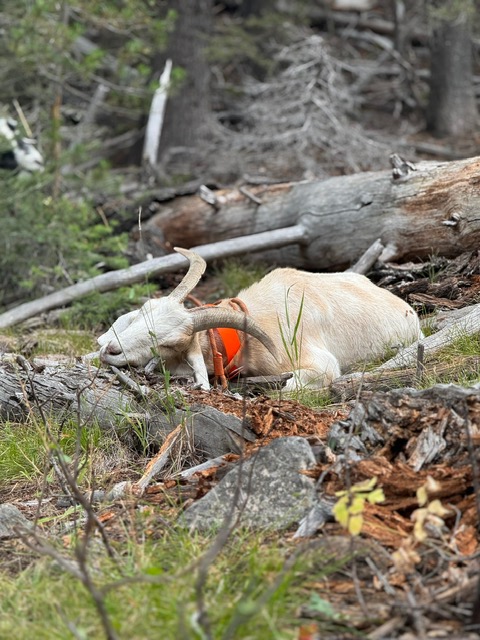
Once again, I take out my hunting kit and begin the work. Challenged by the steepness of the sidehill and the buck’s precarious position, I drag it into a natural flat spot in the shade of a pine tree. As I methodically work to quarter him, I occasionally look up to check on the goats, which have migrated over to a bush and begun to terrorize it, taking turns to rake their horns and put on a show for their companions. Finally finished, I retrieve them, one at a time, and carefully place and adjust their meat loads, resting the pannier’s weight on my knee as I hang the opposite side. With mule deer, I split the load between two goats, putting the hindquarters on one and the front quarters and loose meat on the other.
Cautiously, we make our way back down to the stream, and the remaining goats stampede down to us, sending rocks and boulders crashing into the stream below. For these treacherous sidehills, I pick a path with no risk of getting hit by something set loose from above: either long, sweeping switchbacks that let the goats catch up before I reverse course, or a natural flow that follows the terrain and gently angles down to the bottom.
Back at camp, I take inventory of our gear, shifting around equipment loads to make up for the lost space in meat packs. By running reduced gear loads coming in, I’m able to maximize what we carry going out on these successful hunts, and I assemble the bulk of our gear into two large sets of panniers while the remaining goats tackle the meat loads. Staggering at first under the new weight, they quickly find their footing and resume antagonizing one another, completely unbothered by their packs or the contents in them. Making my final adjustments to their heavy loads, we move steadily down the drainage, pausing to take one last look at the mountain before turning to the long packout ahead of us.
NATHAN PUTNAM is a board member of the North American Packgoat Association. He and his wife, Jackie, own Putnam Pack Goats in Mountain Home, Idaho, where they breed SaberPine crosses and build pack goat equipment. They enjoy hiking and hunting in the Idaho backcountry with their goats. You can learn more about them at putnampackgoats.com or on Instagram @putnampackgoats.