Responding to Traumatic Goat Injuries
Reading Time: 6 minutes
Goat injuries happen no matter how careful you are. learn how to prepare for the treatment of different injuries that goats can end up with.
You can never be fully prepared for every potential injury that can happen to your goat herd. Even the most meticulous safety practices are hardly a guarantee because goats, after all, have an odd knack for finding themselves in the most impossible situations. Your best plan of action is to become familiar with general concerns associated with physical trauma and have a first aid kit on hand.
Expect the Unexpected
Traumatic injuries can vary immensely and will have different immediate treatment and recovery needs. Any conversation about trauma includes a plan for worst-case scenarios. If an event is beyond your scope of skills to manage and an emergency veterinarian isn’t in reach, you should have a way to euthanize in an emergency and have a trusted contact for assistance.
The reaction to pain exhibited by goats varies widely. Some are dramatic and may act like an injury is worse than it is, whereas others might hide their pain for extended periods of time. Don’t rely on only the physical reaction to gauge how intense a situation is. Rather, figure out the type of injury, examine its extent, and evaluate treatment options.
Having a strong veterinarian-client-patient-relationship (VCPR) before a situation like this is crucial. Unfortunately, not everyone has a caprine-knowledgeable local veterinarian. However, having a veterinarian, even one who’s distant, on your property at least once a year can help you keep your VCPR in good standing and enable you to get written prescriptions. This is also an excellent time to ask them to teach you emergency protocols and basic treatment skills, and develop a plan should the worst happen.
Injury Types
Goats can suffer traumatic injuries from a range of situations, such as a hazardous environment or even bad luck.
One of the most common crisis scenarios, in urban and rural environments alike, is a predator attack. Neighborhood dogs and coyotes are the usual culprits, but even birds of prey may target young kids and distressed or immobilized adults (i.e., head stuck in a fence). These types of attacks may result in external and internal damage, along with the risk of extreme shock, which alone can be life-threatening.
Dairy or nursing does run a risk of udder damage. Udders are especially vulnerable to external cuts, tears, and abrasions, or becoming caught on a fence. Because this organ is made up largely of muscle, fat, and connective tissue, injuries can be quite severe and bleed profusely. The udder is also subject to internal damage and bruising due to its large collection of blood vessels.
Your goat may also suffer injuries to other sensitive spots, including eyes, ears, and hooves. Ear injuries, such as tears, and hoof injuries, such as punctures or infections, can often appear worse than they really are, but require careful evaluation and, in some cases, veterinary assistance.
Abscesses are a common response to physical trauma in livestock and can appear anywhere on the body. These should be handled with caution, due to the risk of spreading infection (depending on abscess type), and vulnerability to further infection if managed improperly.
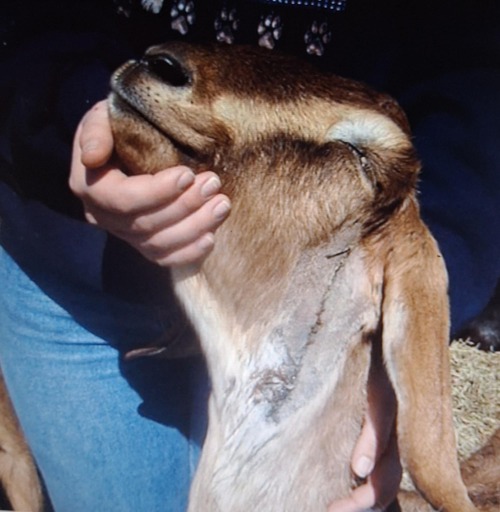
Photo credit – Emily Dixon, Ozark Jewels
General Care Guidelines
It’s easy to panic when you walk out to the barn and see a goat in distress. This is the time to take a deep breath, evaluate the situation, and see what you can handle right away. If you know something is beyond your scope of expertise, don’t be shy about contacting your veterinarian. Even if they can’t make an emergency call, they or a staff member may be able to walk you through some actionable steps.
Hooves
Knowing basic hoof anatomy is essential to diagnosing a hoof ailment or injury so you understand what “should and shouldn’t” be there, and are able to trim hooves for drainage, or trim them to remove rot or infection, clean them, and wrap and bandage them. Disinfectants and antifungals can be applied to damaged hoof tissue, but you must use products that aren’t abrasive to tender flesh and delicate corium.
Allergic Reaction to Injection
Reactions are not unheard of when it comes to vaccines and medications. Often they’re mild, but in some cases cause anaphylaxis. Fortunately, this is rare, but it must be addressed immediately by giving an epinephrine injection. This is something your veterinarian should be able to provide for use in emergencies, since you may not be able to reach them on short notice during an emergency.
Wound Care and Bandaging
For cuts, scrapes, or leg wounds, proper bandaging can prevent infection and support healing. Clean the wound thoroughly, use pressure to stop bleeding if needed, apply a topical antibacterial ointment, and wrap the area with sterile gauze. Start the wrap above the hoof and move upward, ensuring it’s snug, but not so tight that it impairs circulation. Secure the gauze with cohesive veterinarian wrap, covering from the pastern to the knee or hock. Recheck bandages daily, and look for signs of infection like swelling, heat, unusual drainage, or changes in behavior. For certain types of cuts, like ears and around the face, opt for a liquid bandage product, and if stitching is required, consult your veterinarian.
Injectable antibiotics can be helpful depending on the injury type, swelling, and level of infection (if applicable). Knowing which products to keep on hand and when to use them is helpful in cases like this. All antibiotics require a veterinary prescription, so a VCPR and a discussion with your veterinarian are essential.
Fractures and Splinting
Leg fractures can range from minor cracks to severe, compound (open) breaks. If you suspect a break, the first step is to call your veterinarian. You can provide temporary stabilization to the break using splints. Use rigid supports and soft padding to immobilize the leg, securing them with bandage material. Keep the goat in a confined, quiet space with access to hay and water until professional help can be obtained.
Broken Horns
Like bone fractures, horn breaks can vary widely in type and severity. Because the horn, but not the keratin surrounding it, is living, there may be a great deal of blood and the potential for sinus and tissue infection. Blood stop powder is usually the first step to treat this. In some cases, you can cauterize the wound with a disbudding iron.
Often, the impacted horn is a total loss, and the wound will need to be kept clean and wrapped like any other injury. If it’s an injury to the horn base and the horn hasn’t totally fallen off, secure the base and keep it clean. Because pain medication and antibiotics may be required, this is an injury you should consult your veterinarian about.
Shock
Shock can accompany many types of trauma. Look for rapid breathing, pale mucus membranes, and possibly a low body temperature. Keep the animal in a confined space that’s warm and quiet while you assess vitals. Vitamin B complex and some oral multivitamins can be helpful once the animal is stable and its temperature is rising back to normal.
Preparedness Tips
The best time to prepare for an emergency is before it happens. Keeping medical supplies organized and accessible can make all the difference when every second counts. A well-stocked first aid kit should include wound care essentials, bandages, antiseptics, syringes, electrolytes, and splinting materials.
It’s also smart to keep a printed and digital list of important contacts, including your veterinarian, nearby clinics, and experienced goat mentors. Program these numbers into your phone so they’re easy to find when you’re under pressure.
Consider setting aside a designated recovery space for sick or injured animals. This should be quiet, clean, sheltered from the weather, and easy to monitor. A dedicated pen or stall can prevent further injury, reduce stress, and keep the rest of the herd safe.
While not all injuries can be avoided, being aware of common trauma risks and knowing how to respond is essential to responsible goat care. Preparation and early intervention are key.
Responding to traumatic injuries quickly and calmly can significantly improve outcomes. Delays in treatment often lead to complications, prolonged recovery, or even permanent damage.
JACLYN DE CANDIO is a professional agriculture writer, communications specialist, and farmer. A member of the Ohio Farm Bureau and the Agriculture Communicators Network, she lives in southwest Ohio with her husband and children, where they operate Latria Livestock Co., feeding out market kids and lambs.
Originally published in the October 15, 2025 digital issue of Goat Journal.