A Meaty Comparison: Dairy Goats vs Meat Crosses
How do they measure up when it comes to filling the freezer?
Reading Time: 6 minutes
Over the last 25 years, I’ve often used a quality meat (Boer or Savanna, in my case) over some of my dairy does.
This helps me keep my numbers down, as I don’t retain any of the doelings. I don’t keep them simply because it’s not in my plans to run both a meat herd and a dairy herd. They’re extremely good breeding stock for commercial meat operations. With the extra milk boost from their dairy genetics, they raise fantastic meat kids, and they tend to do it faster than the straight meat mamas.
Breeding to a meat buck also gives me kids that appeal more to the meat buyers at the auction on sale day. Whether they’re actually heftier or not, that “meat goat look” gives them a boost in the auction ring. So, it makes my excess bucklings and wether kids more valuable.
Is It Worth It?
But I’ve often wondered whether it was worth losing the marketability of the dairy doelings to my dairy goat buyers, just to gain the slightly better marketability of the male kids. After all, my hefty dairy (LaMancha) wethers do a fantastic job of filling the freezers of my family and my direct customers. The extras go to the auction meat buyers, and they are the only ones who pay extra for the meat goat look. My direct buyers don’t care what the breed is, as long as the carcass is quality.
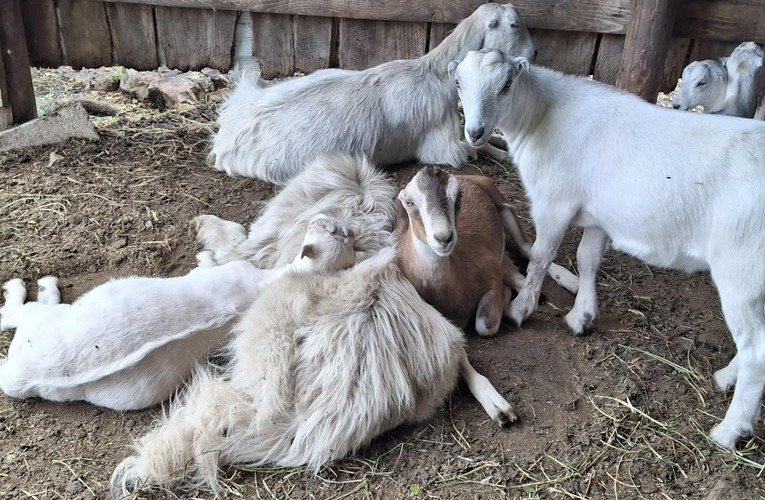
Photo credit: Emily Dixon
So, this year, I harvested meat-cross kids right beside my pure dairy kids, and did a real comparison. The meat-cross kids were sired by a very nice commercial Savanna buck named Meatball. The pure dairy kids were sired by a young experimental buck named Tango, and a purebred LaMancha buck named Gemini.
Dams were all straight dairy genetics, mostly pure LaMancha, although a few have a tiny bit of Alpine ancestry far back in their genetics.
Stacking Up
Kids were in the 7-to 9-pound range at birth. Two exceptions were a tiny buckling at birth that stayed small but healthy; the other was over 100 pounds by 6 months. Both were left out of comparisons because of this. I made direct comparisons fairly. Kids raised as singles were compared to other singles; twins were compared to other twins. I don’t let does raise triplets, so no kids were raised as triplets.
Kids were all raised on their dams’ milk, browse, grass, and alfalfa hay; no grains. The kids weren’t weaned unless they weaned themselves, as a couple had shortly before harvest. If I needed to milk their dams, I’d put the kids up at night and milk in the morning. Almost all kids were still nursing on harvest day. They were harvested between 7 and 9 months of age, with an average age of 8 months.
The live weights ranged from 105 pounds to 120 pounds. The Savanna kids looked heftier to the eye, in general. However, on average, the dairy kids were actually a bit heavier on the scale. The Savanna kids had a bit heavier hide and bone, which is normal for a meat breed versus a dairy breed.
Carcasses were very similar:
Both meat crosses and straight dairy kids had good fat, and very satisfactory meat yields. Carcass yields ranged from 49% to 55% of live weight. Lower and higher carcass yields were shared between the straight dairy and the meat crosses.
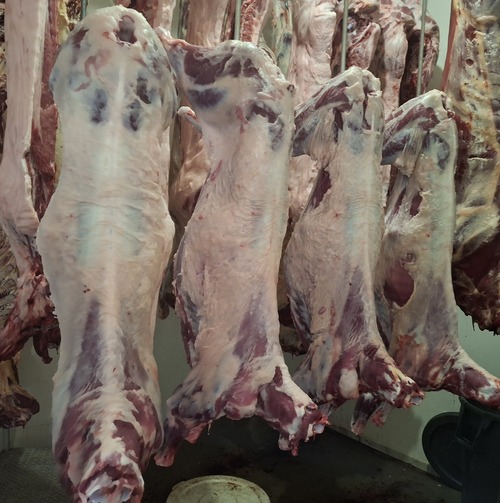
Photo credit: Emily Dixon.
When the carcasses were processed into cuts, the results were similar. I took pictures of the chops, loin roasts, stew meat, cutlets, etc. There was no noticeable difference. There were also no noticeable differences in the taste or texture. Of course, these boys were all raised exactly the same, on the same diets. I always find this to have much more impact on flavor and texture than the breed, the sex, or even the age of the goat.
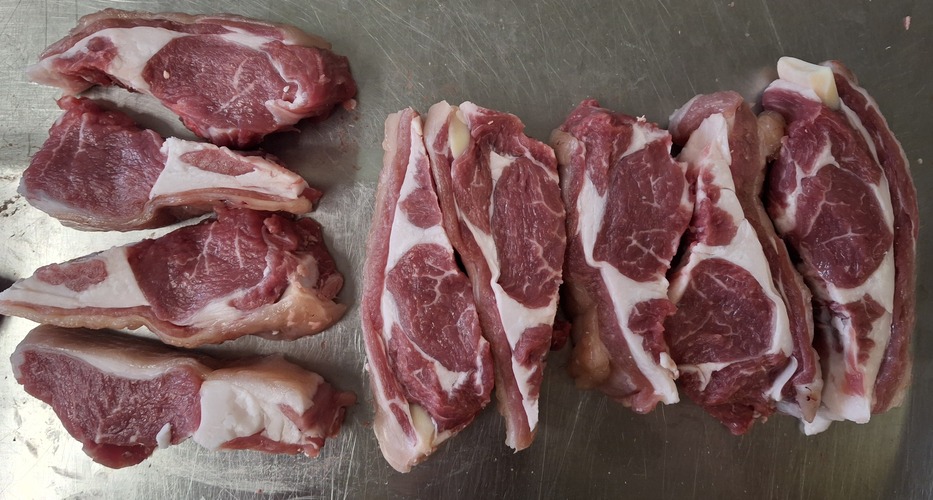
Photo credit: Emily Dixon.
Over the years, I’ve harvested fullblood Boer kids next to purebred dairy kids. All were raised the same, on the same diets. Again, the taste, texture, and quality weren’t noticeably different. Fat coverage was the same.
My observations
Comparing these 2025 meat cross kids to the pure standard dairy kids cemented what I’d always thought.
If I plan to market all the kids to auction buyers or harvest them myself, it’s well worth it to use a quality meat buck over my does. The meat buyers at auction will pay more for the extras, even if it’s just for that meat goat look. But if I want to market or retain any dairy doelings, it’s not worth losing that ability, just to put a little bit of extra “chunk” on the buckling or wether kids by crossbreeding. Obviously, results will vary based on management. With my management style and my solid-type dairy does, these were my results.
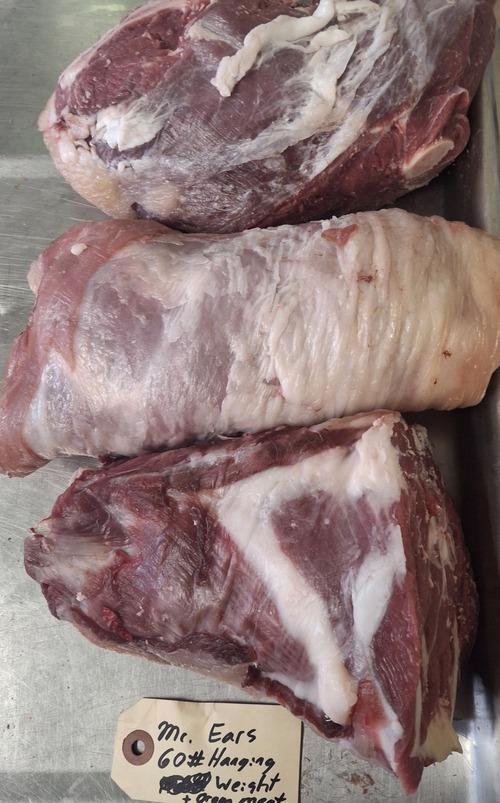
Photo credit: Emily Dixon.
So, I will likely keep a meat buck around to breed does that I don’t intend to retain doelings from that year. I always want wethers for my freezer and my customers. But these straight dairy kids continue to fill my freezer as well as, or almost as well as, the meat crosses. So, I’ll not lose sleep over which is a better plan year-to-year. They both do a wonderful job. I’m extremely happy with the quality of all of these carcasses. The cuts pictured are a variety from both pure dairy kids and meat cross kids.
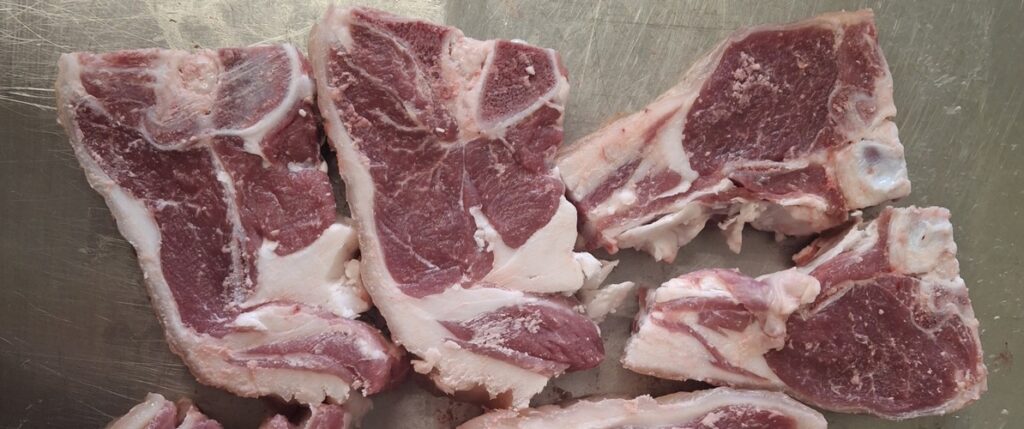
Photo credit: Emily Dixon.
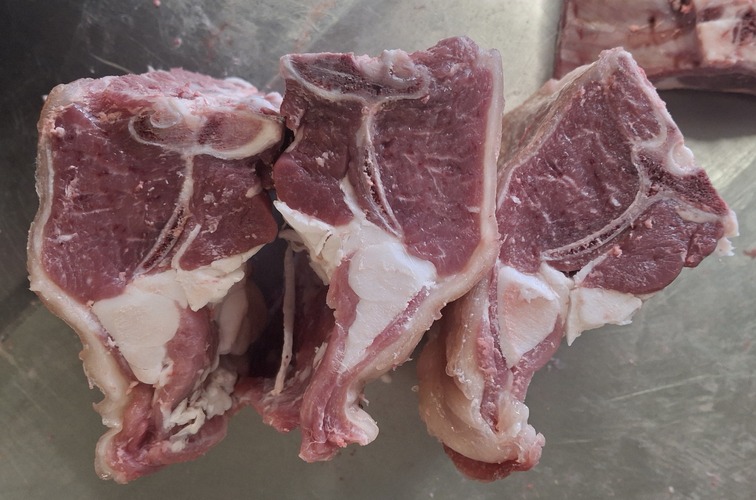
Photo credit: Emily Dixon.
My takeaways from this year’s goat kid harvesting season:
- Management is more important than the breed.
- Solid does raise solid kids.
- Milk always grows butcher kids the best.
- Quality in, quality out.
- Grain is not needed for a fat, delicious carcass, though it can be fed if desired.
- Goat meat from a healthy goat is not necessarily naturally lean, and the fat is delicious.
The Best Plan
I’m often approached by people with dairy goats who talk about adding a couple of meat goats to breed, with plans to fill their freezer with the resulting kids. This isn’t a “bad plan”, but it can be challenging. Especially if (as many goat people are) they’re working with a small acreage and the numbers are a challenge.
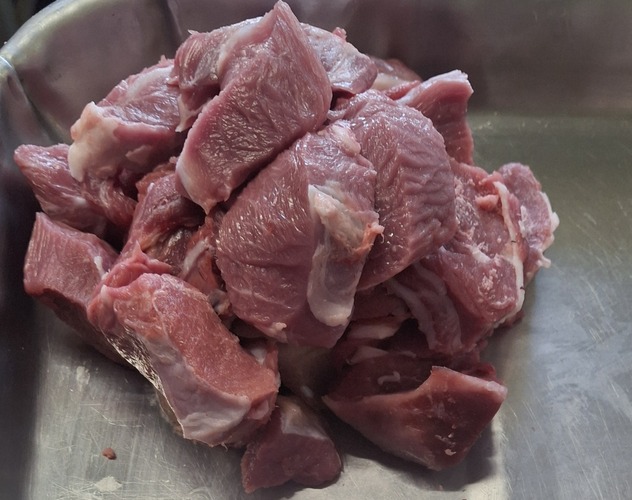
Photo credit: Emily Dixon.
One challenge is that meat goats tend to get obese on the same diets many dairy goats are fed to support milk production. Doable, but challenging. Another challenge is finding and keeping a meat buck to breed just a few meat does, while already keeping and housing a dairy buck for their dairy does. Again, doable but challenging. Of course, the meat can be bred to the dairy buck, eliminating the need to house the extra buck. Another challenge can be biosecurity. Finding a meat breeder who tests for the usual diseases most dairy breeders test for can be difficult.
There is no reason goat people can’t keep dairy and meat goats. But if they simply want to fill their freezers with quality meat and already have dairy goats, they can easily do so with a few simple management changes. It doesn’t require a meat breed to do it well. All goats are made of meat, and all of it’s equally tasty if managed properly. Managed correctly, dairy goats fill both the milk pail and the freezer very nicely. They can be bred to a quality meat buck, if that fits your plans.
In the end, I feel the only thing you must do is decide what is best for you and your situation.
EMILY DIXON lives in the Ozarks of southern Missouri. She started with a hodgepodge of goats in 2000 before quickly focusing on LaMancha and Nubian dairy goats. She also kept a small commercial Boer herd for about 10 years and spent three years milking a large commercial dairy herd. She now concentrates on registered LaManchas and recorded-grade dairy goats for milk and meat. She also keeps beef cows and an always-fluctuating menagerie of dogs and cats. Her passion is her family, farm, animals, and humane, compassionate dairy and meat production.