Squamous Cell Carcinoma in Goats
Reading Time: 5 minutes
With more goats in the U.S. being raised as pets or in small herds, rather than as production animals, they’re living longer, and their owners are more likely to take them to veterinarians for a variety of issues. One of these issues is cancer.
Only in the last 25+ years have veterinarians begun to seriously study cancer in goats. A retrospective study of biopsies and necropsies in 2013 at the Oregon State University School of Veterinary Medicine (OSU) found 102 tumors in 100 mostly female goats (out of 1,146 biopsies and necropsies) between 1987and 2011. The most common types of cancer they found included:
- Lymphomas. Seventeen had lymphomas (tumors of the lymph nodes) — most of which were diagnosed after death. The median age of the goats was 3 years, with ages between 1 and 9 years old.
- Squamous Cell Carcinoma (SCC). This cancer was diagnosed in 10 goats and was found in the udder, perianal region, horn base, vulva, and eyelid.
- Thymoma. This is a tumor of the thymus, a small gland in the chest. OSU found nine goats with this type of tumor. They ranged in age from 2 to 12 years old.
- Mammary Carcinoma. These were adenocarcinomas, a type of cancer that arises from the cells lining the mammary gland. Tumors were identified in seven goats, all female and older than 4 years.
- Malignant Melanoma. Four of the goats had malignant melanoma; two were found on the coronal band of the hoof, one from the horn base, and the location of the other wasn’t documented.
Other less common tumors included those of the mouth, nervous system, and endocrine system. Dwarf, Nubian, and Saanen goats had the highest incidence of cancer, whereas crossbred goats and a few other breeds had the lowest.
In 2023, Colorado State University Teaching Hospital (CSU) examined 58 cancers identified in 46 of 1,441 goats, observed from March 2007 to March 2022. The cancers were most commonly found in Saanen, Nubian, and Pygmy goats. The most common types of cancer were:
- Squamous Cell Carcinoma
- Thymoma
- Mammary Carcinoma
As you can see by cases of the most common cancers, squamous cell carcinoma is high on the list and was found to be the most frequent in a 2023 literature review published in Veterinary Science. In that study, 31% of the goats with cancers were found to have SCC.
SCC has come to the attention of many Nigerian Dwarf goat owners and veterinarians due to its prevalence. This may be in part because it’s external and often noticed before it gets out of control and makes the goat really sick.
To Participate In The Study
To participate in the study, you need a case of SCC that’s been confirmed by biopsy. To get your goat(s) into the study, you’ll need to send the following items to Rebecca R. Bellone at research@vgl.ucdavis.edu:
- A copy of the biopsy report from your vet, and
- Photos of your goat, along with pedigree information.
To participate in the study, you need a case of SCC that’s been confirmed by biopsy. To get your goat(s) into the study, you’ll need to send the following items to Rebecca R. Bellone at research@vgl.ucdavis.edu:
You’ll need to sign a consent form and provide DNA (so your goat needs to still be alive). However, if your goat with confirmed SCC has previously died or been euthanized, you may provide the above information, which may be useful later in the study.
What risk factors can lead to SCC in goats?
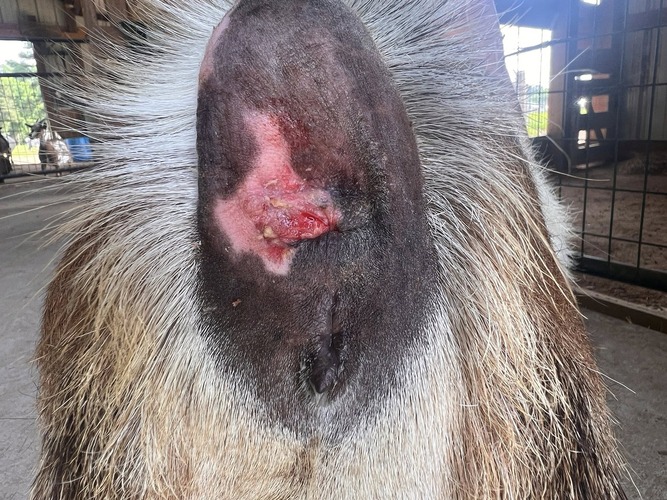
White goats are more likely to develop SCC, and it’s usually found on the udder or perineum, which have more sun exposure. It’s also more common in areas with hotter climates, implicating ultraviolet light as a likely causative factor.
A report on nine goats with SCC in Canada found that it occurs more frequently in Nigerian Dwarfs, as well as in female goats. This may be because more does are kept than bucks, and they may be considered more valuable to their owners.
In Australia, where SCC is not uncommon in sheep, it’s been associated with a papillomavirus.
How does SCC present?
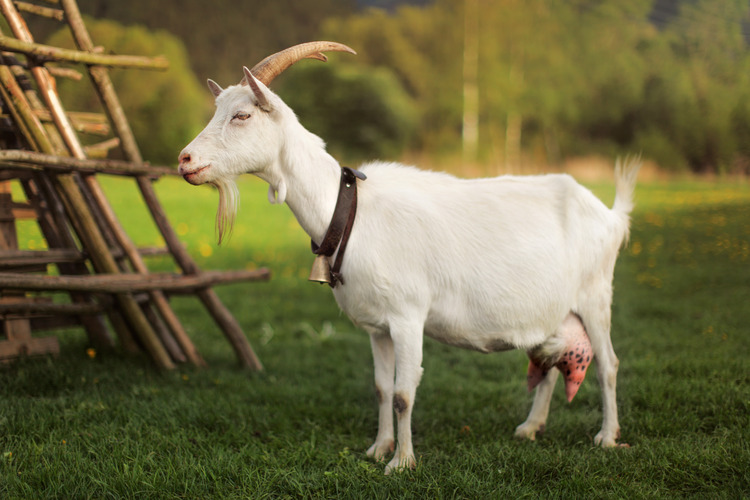
According to Meat and Livestock Australia’s Veterinary Handbook Disease Finder, “[l]esions start as thickened areas of reddened, flaking skin that later become ulcerated, necrotic, bleeding masses.” It’s usually found on lightly pigmented or hairless parts of the body. They’ve also been described as raised masses or cauliflower-like.
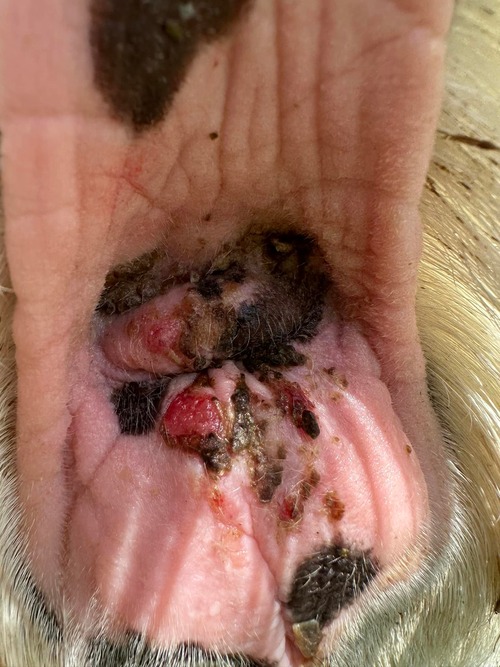
SCC tumors are not only unsightly but can also lead to ulceration and infection, cause problems with urination and defecation, attract flies, and ultimately kill goats. Larger tumors are harder to eradicate entirely, indicating that the earlier they’re caught, the better the outcome. As the disease progresses, the goat loses body condition, and because it typically occurs in older goats, the animal ultimately dies or must be euthanized.
How is SCC treated? Treatment can include surgical excision, cryotherapy, radiation, chemotherapy, or hyperthermic treatment. Lesions that are removed surgically or with cryotherapy often return. However, in one reported case, a prized dairy goat survived SCC (to date) by having a bilateral mastectomy.
A study at UC Davis on SCC was initiated to determine whether there’s a genetic link among goats that develop the condition, given the higher incidence among Nigerian Dwarfs.
SCC study. Dr. Rebecca Bellone and her team are leading the ongoing study through the Veterinary Genetics Laboratory at the University of California-Davis. Dr. Bellone says, “We hypothesize there is a genetic risk component, and once we have enough samples to be appropriately powered, we will conduct the genomic study to try to identify a genetic link to the risk for this cancer in goats.” A genetic link to SCC was previously identified in horses.
She informs me that anyone interested in participating should be referred to them. Although the focus is on Nigerian Dwarf goats, they will accept samples from any goat breed diagnosed with SCC. The researchers are also looking to collect hair and blood from animals diagnosed with cancer and older related animals that haven’t had any evidence of cancer.
If you have a squamous cell cancer in one of your goats, Dr. Bellone told me as recently as September that the study is still accepting participants. There’s also a Facebook page at www.facebook.com/groups/388781719212604/ where goat owners who have questions or whose animals have experienced it share their experiences.
Cheryl K. Smith has raised miniature goats in the Coast Range of Oregon since 1998. She is the author of Goat Health Care, Raising Goats for Dummies, and Goat Midwifery. She has written two books in the Hidden Creek Farm cozy mystery series: Shed Boy and Gone Goat.
References:
- Löhr, CV. 2013. “One Hundred Two Tumors in 100 Goats (1987–2011).” Veterinary Pathology. 50(4): 668-675. doi:10.1177/0300985812471544
- Krus, CB, C Mullins, and R Oman. 2023. “Goats diagnosed with neoplasia display variability in clinical presentations, treatments, and outcomes.” https://avmajournals.avma.org/view/journals/javma/261/5/javma.22.11.0530.xml?tab_body=fulltext
- 2015 Presentation, treatment, and outcome of squamous cell carcinoma in the perineal region of 9 goats. https://pmc.ncbi.nlm.nih.gov/articles/PMC4572820/
- Jackson Vasconcelos, et al. 2023. Neoplasms in Domestic Ruminants and Swine: A Systematic Literature Review. Veterinary Sciences 10(2): 163. DOI:10.3390/vetsci10020163
- www.andda.org/post/squamous-cell-carcinoma
- www.vetmed.ucdavis.edu/news/champion-show-and-breeding-goat-saved-cancer