Off-Label Medications for Goats
What it is, what it isn’t, and what it means for your herd.
Reading Time: 3 minutes
Medical treatments and finding appropriate products for them are among the most frustrating aspects of goat rearing. The harsh reality is that here in the U.S., goats are considered a minor species compared to their barnyard counterparts, like cattle and pigs.
Not only are there few veterinarians with expertise and experience to treat them, but there are also very few pharmaceuticals labeled specifically for them. This leaves everyone from backyard goatherds to veterinary professionals using existing products in an extra-label (sometimes referred to as “off-label”) manner.
Off-Label Usage: What and Why?
Why are we in this unique position to begin with? The biggest reason is that it’s not economically viable for pharmaceutical companies to undergo the costly tests and approval required to bring a product for goats to market. And while there is certainly a strong demand from the goat community for specific products, it’s unlikely to change anytime soon, since national goatherd numbers are quite low (currently around 2.5 million, down from 12 million in 1990) and holding relatively stable.
But just because a product isn’t labeled or formally tested on goats doesn’t mean it won’t be effective or safe for them. And it isn’t illegal to use them outside of their labeling with—and only with—the supervision of a veterinarian with whom you have an ongoing relationship.
Another concern with off-label drug use is the withdrawal time for animals being used for milk and meat. Even if you keep milk and meat goats solely for your own use, it’s important to respect withdrawal periods and use antibiotics only as needed to prevent antimicrobial resistance from entering the human food chain. The same mindset should also go into selling animals you’ve recently treated, even if they’re just going to the sale barn.
Limitations
Since there are few formal studies, the “guidelines” for goat treatment and the use of various antibiotics largely come from goatherders and their veterinarians with years of experience. That means there’s an abundance of recommendations for what products you should use for whatever issue your goats are having. However, not all of them are sound.
Starting with the basics, remember that before giving anything extra-label, you must first have a vet with whom you have an active veterinary-client-patient-relationship (VCPR). This means it is not legal to get antibiotics from a friend or neighbor.
The odds of there being any legal repercussions are, of course, relatively low. However, should your state’s department of agriculture visit your property and come across antibiotics for species you do not own, and without a script from your personal vet, you will find yourself in some hot water.
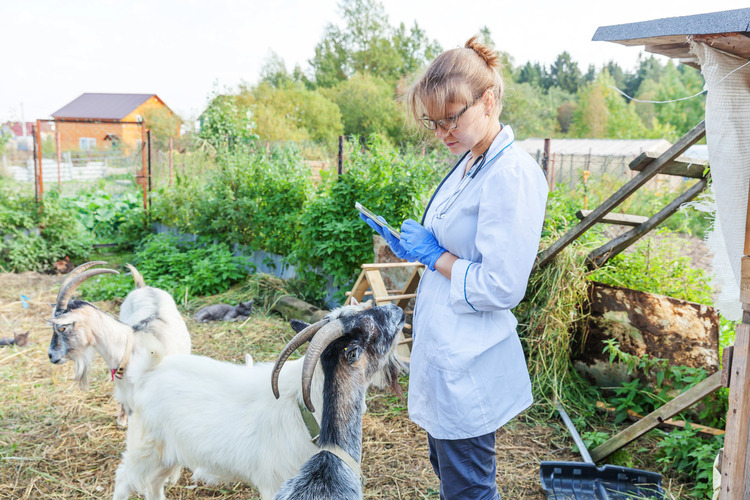
Goats are classified as food animals, which imposes stricter limits on the drugs that can be used. Which means products not approved for food species can’t be given, even under extra-label use.
The Food and Drug Administration (FDA) specifically prohibits extra-label use of certain drugs in food animals, including conditionally approved and indexed products. Conditionally approved drugs may be used only exactly as labeled, while indexed drugs may be used only in non-food animals and are not tested for human food safety.
A great example of indexed drugs in the goat world is the use of Baytril (enrofloxacin) to treat coccidia. This drug is explicitly banned in all food animals in the U.S., making its use in goats illegal regardless of circumstance. Similarly, human over-the-counter medications are sometimes suggested for goats, but these should not be used unless there is a livestock-approved equivalent that is legally permitted. For instance, instead of Pepto-Bismol or aspirin intended for people, veterinary formulations labeled for livestock are the only products that should be used.
Good Stewardship Practices
Although it’s already been stressed, off-label antibiotic usage all boils down to a working relationship with your veterinarian—preferably one with small ruminant experience or, at the very least, food animals.
Once you have a good VCPR established, most farm vets will be more than happy to help prescribe antibiotics as needed or even in advance, so you can maintain an on-site pharmacy. This covers your bases should authorities have questions; your vet can verify immediately.
Your vet is also there to help you write protocols, dosages, and administrations that are appropriate for goats under off-label use. Experienced goatherds can also be helpful advisors, especially if you have a vet who isn’t especially goat savvy. But make sure you always back up your dosages with your veterinarian.
And remember always to follow the recommended guidelines for dosage amounts and treatment periods. Failure to follow these can contribute to the development of microbial resistance. Proper antibiotic usage not only saves you time and money but also keeps our food supply safe.
JACLYN DE CANDIO is a professional agriculture writer, communications specialist, and farmer. A member of the Ohio Farm Bureau and the Agriculture Communicators Network, she lives in southwest Ohio with her husband and children, where they operate Latria Livestock Co., feeding out market kids and lambs.