Grayanotoxin and Other Types of Plant Poisoning in Goats
Reading Time: 9 minutes
Pleas for help from goat keepers whose goats have eaten rhododendrons are a regular occurrence on social media and online forums. Often, poisoning results from a friendly neighbor “helpfully” throwing the trimmings from their bushes over the fence for the goats. It’s most common in winter and spring. The poison in this case is a particularly nasty one — grayanotoxin.
Grayanotoxin
According to A Guide to Plant Poisoning of Animals of North America, goats are the most susceptible to grayanotoxin poisoning, and “as little as 0.2% of an animal’s body weight of green leaves can cause poisoning.” Another study found that the amount was even less: only 0.1%. In addition to physical signs in the goat, poisoning by the toxin can lead to abortion or mummification of fetuses in pregnant goats, and can affect milk production as well. It’s unknown whether drinking the milk of an affected goat can poison a person.
Signs of Poisoning
When a goat eats too much of a grayanotoxin-containing plant, it usually presents with vomiting (sometimes even projectile vomiting) and bloat. Vomiting by a goat indicates that something is seriously wrong and needs immediate investigation and intervention, ideally in consultation with your vet.
Other signs of poisoning include weakness, depression, pain (often indicated by teeth grinding), slowed heart rate, difficulty breathing, fever, vocalizing, and even seizures in severe cases. The effects are usually seen within six hours of eating the plants, but in some cases have taken as long as 12 hours to manifest.
Sometimes an animal will recover within a day, but in other cases, illness can last a week. When a goat dies from eating the plants, the cause is usually respiratory failure, but it can also be from aspiration pneumonia days after the initial event.
Treatment
There’s no cure for grayanotoxin poisoning, but there are treatments that can help. If a vet can’t be reached to treat the goat and your goat has recently eaten the plant, treat with activated charcoal, being careful to avoid aspiration. There are also a few home remedies that some goat keepers have found helpful, which you can find in my book Goat Health Care. Recovery depends on how long after poisoning the goat is found and how much it ate.
Treatment by a veterinarian can include giving activated charcoal to bind the toxins (adsorption), magnesium hydroxide (to neutralize stomach acid), atropine (to increase a slow heart rate), intravenous fluids (to rehydrate the goat), and antibiotics (to treat or head off pneumonia in case the goat has aspirated). In some cases, a vet will perform a rumenotomy (surgically cutting into the stomach) to remove the poisonous leaves.
The mortality rate among goats treated in the field by veterinarians is reported to be as high as 36%.
Besides treating any affected goats, it’s important to remove the source of the poisoning from their reach and that of any unaffected herdmates. This may mean removing branches that had been given to them or even digging up the plants they can access.
Grayanotoxin-Containing Plants
A few different plants contain grayanotoxins and should never be fed to or grown near goats, if possible. (Where I live, in the Oregon coast range, rhododendrons grow wild.)
Rhododendrons and azaleas (Rhododendron spp.)
Rhododendrons are common flowering ornamental plants in the heath family; in North America, there are 250 species. They have alternating, leathery evergreen leaves. They produce large, showy flowers of varying colors.
Grayanotoxins are found in leaves, branches, nectar, and flowers of the plants, so no part is safe.

Photo credit: Cheryl K. Smith
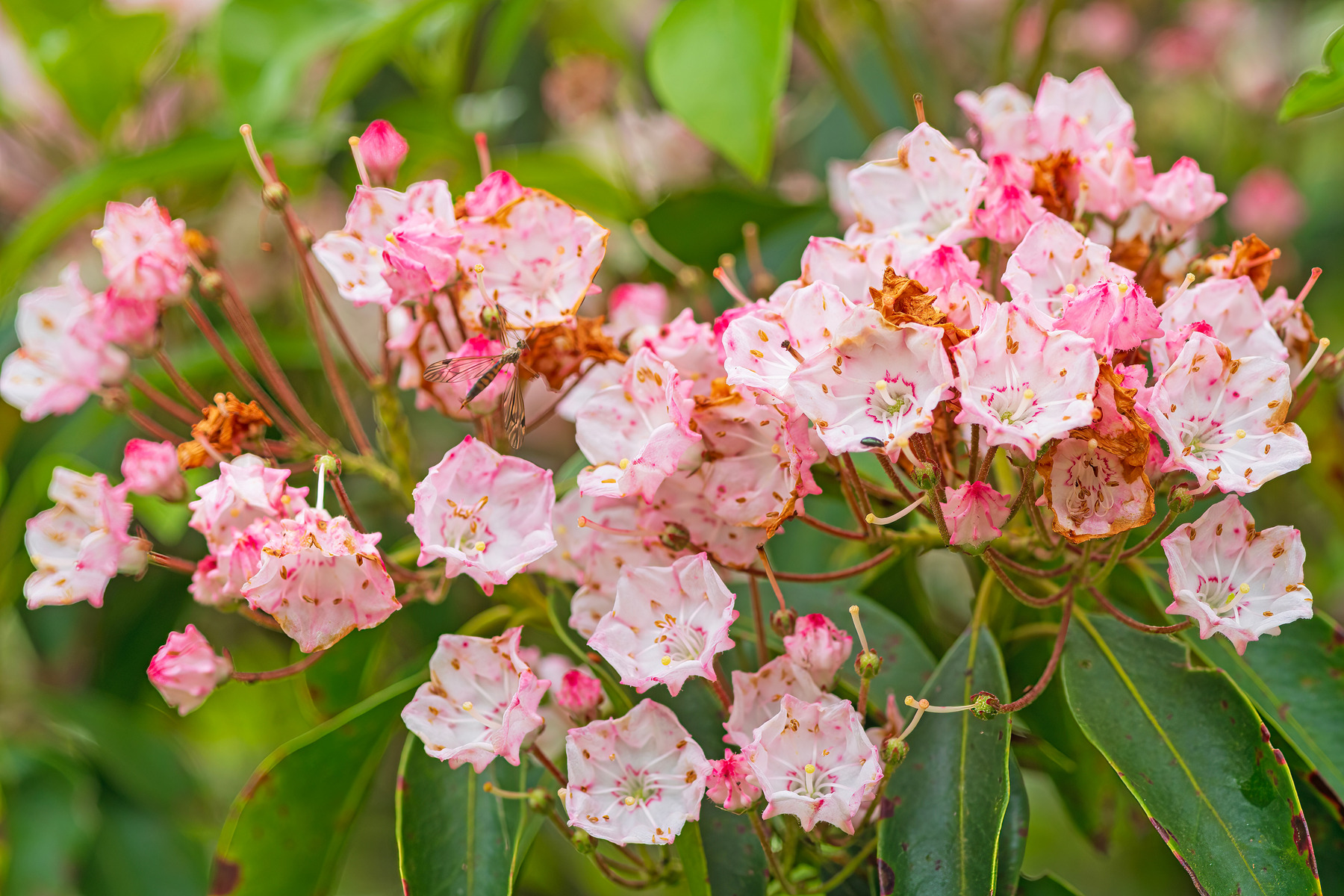
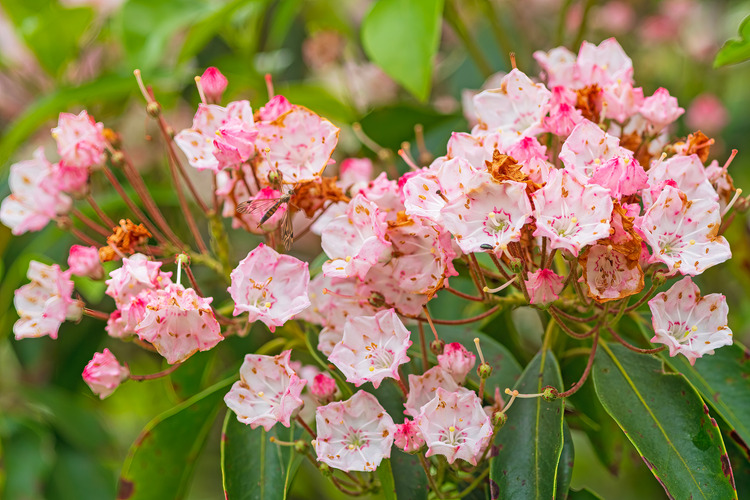
Mountain Laurel (Kalmia latifolia)
These shrubs are found mainly in the eastern and southern parts of North America, but can also be found in the Pacific Northwest. This is a different plant than the bay laurel, where we get bay leaves. It has white to pink flowers that grow in clusters.
Like the rhododendron, grayanotoxins are found in all parts of the plant. In addition to the grayanotoxins andromedotoxin, it contains the glycoside arbutin, which is toxic to animals in high doses and causes vomiting.
AdobeStock/Wildnerdpix
Japanese Pieris (Pieris japonica)
The Japanese Pieris originated in Japan, as implied by the name. It’s an ornamental evergreen shrub with small drooping flowers that range from white to pink. The main toxin is andromedotoxin.
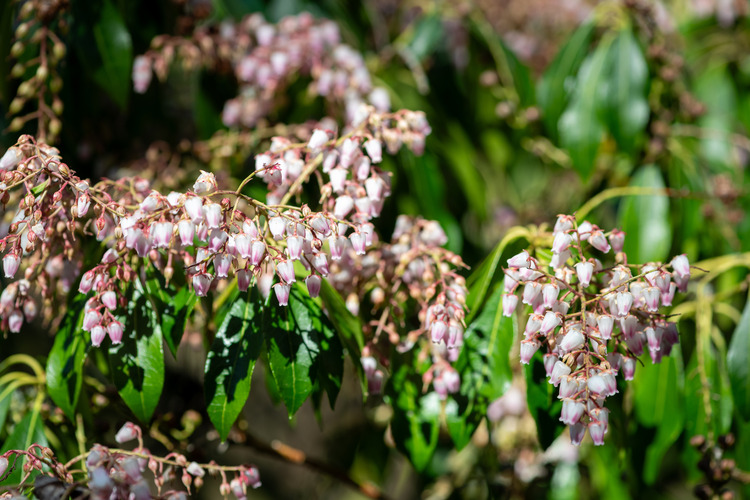
Photo credit: AdobeStock/Tom
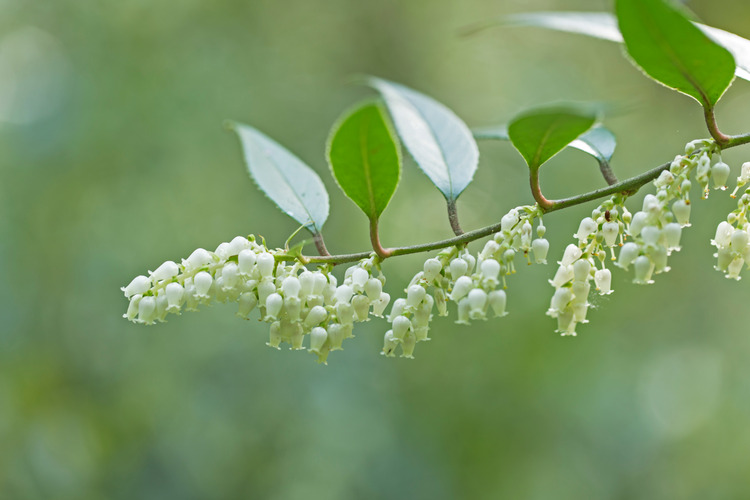
Fetterbush, Florida Doghobble (Agarista populifolia)
Fetterbush, or doghobble, is another ornamental plant, of which there are several species. The leaves are glossy and can be green or reddish purple, depending on the species. The small, five-toothed bell-shaped flowers are pink to white. Like the other plants, all parts are toxic. The primary toxin is andromedotoxin.
Mycotoxins
Mycotoxins are the toxins caused by mold that affect plants and food. They include aflatoxins, ochratoxin A, patulin, fumonisins, zearalenone, and nivalenol (deoxynivalenol). Many of these grow in stored crops, such as hay or grain, or are found in dried vine fruits or rotting apples; others are found in soil. They’re not technically plant poisons, but they’re still a concern because they grow on feed and can poison animals that eat them.
Goats and other ruminants are less likely to be affected by mycotoxins than monogastric animals; however, they should still be avoided. Signs that a goat has been poisoned by mycotoxins include diarrhea, loss of appetite and weight, respiratory issues, damage to the liver, spleen, and kidneys, suppression of the immune system, infertility or other reproductive problems, and even death.
Effects on Milk
Besides sickening goats, mycotoxins can also affect their milk. Aflatoxin M1 resists heat, which means that pasteurization is not enough to prevent its passage to humans from milk. A study on dairy goats in Greece found higher levels of Aflatoxin M1 in milk from goats fed silage and grain than from those that foraged. The presence of the toxin was also found to be higher in winter than summer, likely cause the goats relied more on stored feed in colder months.
Prevention
To avoid goat poisoning by mycotoxins, make sure to store grain securely, in clean and dry cans (I use metal, because rats can chew through plastic); don’t keep your grain too long and use the oldest first; clean out old feed before adding new to your storage container; and talk to your feed producer about whether they analyze their feed for mycotoxins. Additionally, if you are able, let your goats forage more of their food.
Brassicas (Cruciferae)
Brassicas are in a category of their own because of the variety of poisoning problems they can cause. They include plants such as turnips, kale, broccoli, Brussels sprouts, cauliflower, and others. While all of these plants are used as forage, especially in fall and winter, a sudden introduction or too much can cause problems.
A friendly neighbor was cleaning out her garden for the winter and decided to give my goats a treat by throwing all her leftover kale plants over the fence. The next day, I found a buckling down, with rapid respirations, weakness, and other symptoms. After a seizure, he died on the front seat of my truck right before we got to the veterinarian. I believe he ate too much of it, which led to his condition.
The following are some of the problems caused by brassica poisoning:
Polioencephalomalacia (PEM)
This condition can be caused either by too much sulfur intake or decreased thiamine (vitamin B1) production, both as a result of sudden or long-term overconsumption of brassicas. Signs that a goat has PEM include circling, seizures, increased temperature and respirations, lethargy, blindness, and death. The typical presentation is when a goat’s head is twisted back and rigid (called opisthotonos). The condition is treated with frequent thiamine injections and fluids, but it’s often fatal.
Hemolytic Anemia
This is more commonly found in cattle, and generally when they are on a brassica-only diet. The plants contain an amino acid compound, S-methyl–L-cysteine sulfoxide (SMCO), which converts to dimethyl disulfide. This compound oxidizes hemoglobin, which the spleen then removes from the blood, causing anemia. It also ruptures red blood cells. Both these lead to a weakened animal, with pale membranes, dark urine, and eventually death.
Iodine Deficiency
Even goats that get enough iodine in their diets can develop secondary iodine deficiency when consuming too much of a goitrogenic plant, such as a brassica. These plants block the use and metabolic activity of the iodine that’s in the diet. One telltale sign of iodine deficiency is enlargement of the thyroid gland, called a goiter. This often shows up in the birth of premature, weak, or stillborn kids.
Treatment for this condition is iron or potassium iodide supplementation, under your veterinarian’s supervision.
Prevention
To avoid poisoning by brassicas, limit the amount given to your goats and don’t make sudden changes in their feed routine, and educate neighboring gardeners not to throw leftover plants to your goats without getting permission from you first. If you have kids born with goiters, you may want to eliminate such vegetables from your herd’s diet.
Bracken Fern (Pteridium aquilinum)
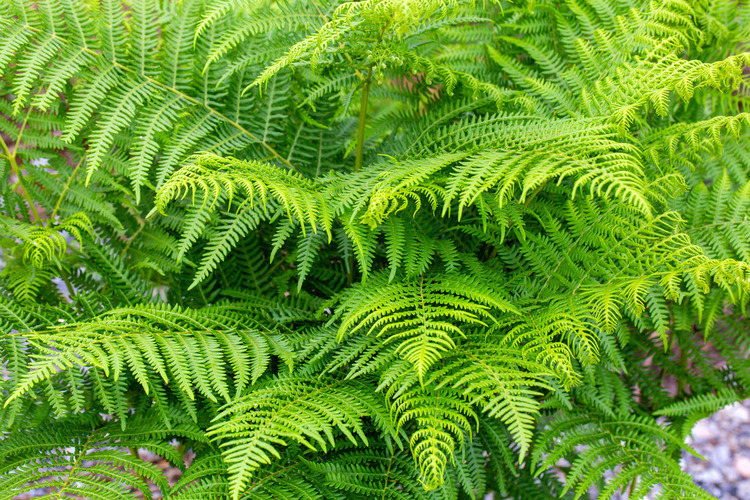
Bracken fern is a perennial that’s found throughout the United States. It’s most commonly seen in shady wooded areas, often after logging or fire. It has green fronds that are triangular in shape, bipinnate and compound, and it has a hairy underside. It spreads through spores, with leaves growing from the rhizome.
Bracken fern (and a few other less-common ferns) can lead to some of the same issues as brassicas. It contains thiaminase, which leads to suppression of thiamine production and ultimately, PEM. It can also suppress RBC production, leading to hemolytic anemia.
Effects on Milk
The plant contains the carcinogen ptaquilaside (PTA), which cannot only affect the animals that eat it but also contaminate the milk they produce—posing a potential risk to humans who drink that milk. Studies have shown a link between consumption of contaminated milk and gastric (stomach) cancer. Pasteurization can substantially decrease the amount of PTA in milk—another reason to avoid raw milk—but not completely eliminate it. It’s also been shown to be in higher concentrations in cheeses made with lower amounts of salt.
Vesicular Carcinoma
This is a type of bladder cancer found in ruminants, most commonly cattle and sheep, that graze bracken fern for extended periods (several weeks or more). It’s caused by PTA, among other adverse effects. It’s found on the stems and leaves and affects bone marrow and the GI tract—mainly in ruminants. Signs that an animal is affected include weakness, fever, pale membranes, weight loss, blood in the urine, light blindness, mouth cancers, and thiamine deficiency.
The condition is usually fatal, although thiamine deficiency can be treated, and antibiotics can be given for secondary infections.
Prevention
Unlike cattle and sheep, goats are likely to avoid bracken fern if they have other choices for browse. It’s important to check your pasture and other areas goats have access to (so you are aware of and can potentially remove the plants if you find them), as well as ensuring they have a ready supply of hay and other feed sources.
Keep Your Goats Safe
Because goats are browsers, any well-fed goat with a variety of browse will generally not overeat any plant. However, it’s still important to know which plants you have in areas your goats can access, and let neighbors know not to throw any trimmings into your goat enclosure without asking. With apps such as Seek, developed by iNaturalist, it’s easy to walk your property, taking photos and identifying plants you need to remove.
- Plants Poisonous to Goats: Introduction
- Poisonous Plants to Goats: Alkaloids
- Plant Poisoning in Goats: Cardiac Glycosides
- Poison Plants: Cyanide Poisoning in Goats
Cheryl K. Smith has raised miniature dairy goats in the coast range of Oregon since 1998. She is an editor for Ogden Publications and the author of Goat Health Care (karmadillo Press), Raising Goats for Dummies (Wiley), Goat Midwifery (karmadillo Press), and two books in the Hidden Creek Farm cozy mysteries series, Shed Boy, and Gone Goat.
References:
- Jansen, SA, et al. 2012. “Grayanotoxin Poisoning: ‘Mad Honey Disease’ and Beyond.” Cardiovasc Toxicol 12(3): 208-15. doi: 10.1007/s12012-012-9162-2.
- www.who.int/news-room/fact-sheets/detail/mycotoxins
- Knight, Anthony P, and Richard G. Walter. 2001. A Guide to Plant Poisoning of Animals in North America. Jackson, Wyoming: Teton NewMedia.
- Puschner, B, DM Holsege, and N Lamberski. 2001. “Grayanotoxin poisoning in three goats.” J Am Vet Med Assoc 218(4): 573-5, 527-8. doi: 10.2460/javma.2001.218.573.
- Rodríguez-Salazar, M, R Muñoz-Arrieta, and A Chacón-Villalobos. 2024. “Stability study of ptaquiloside biotoxin from P. esculentum var. Arachnoideum in bovine milk and artisanal dairy-food products.” Food Research International 192: 114756. www.sciencedirect.com/science/article/abs/pii/S0963996924008263
- Stavropoulos, J, et al. 2025. “Aflatoxin M1 Content and Mastitis-Causing Bacteria in Milk from Skopelos Dairy Goats Reared in Extensive and Intensive Farming Systems.” Animals (Basel) 15(9): 1238. https://pmc.ncbi.nlm.nih.gov/articles/PMC12070892/
- Mytoxins in Small Ruminants. www.alltech.com/small-ruminant-challenges/mycotoxins-small-ruminants
- www.ukvetlivestock.com/content/clinical/plant-poisoning-in-goats/
- www.merckvetmanual.com/toxicology/poisonous-plants/houseplants-and-ornamentals-toxic-to-animals#Grayanotoxin-containing-Plants_v86112327
- https://www.merckvetmanual.com/toxicology/bracken-fern-poisoning/bracken-fern-poisoning-in-animals