Featured Stories

How to Make Paneer Cheese
Knowing how to make paneer cheese was a crucial skill for some Indian and Pakistani families. It provided quick, safe vegetarian protein to round out a healthy meal.
Read More
Why Does My Goat Paw at Me? Caprine Communication
Goats are sensitive to human body language and they try to communicate with us. It’s important to understand their behavior and know how they read ours.
Read More

Back from The Vet: Johne’s Disease
It can lurk in your herd for years without any signs of illness and can spread rapidly. There is no vaccine, no treatment, or method to slow the progression. It is often fatal. What is this insidious disease?
Read More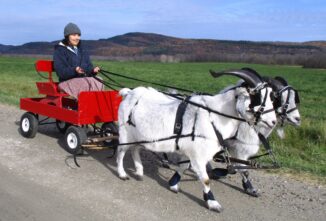
Team Snazzy Goat Pulling Team
Goat pulling teams are awesomely different. When Mika came across old pictures of goats being used as pulling teams she thought, “Well, why not?”
Read More
Scours in Goats and a Homemade Electrolyte Recipe
It is imperative that you keep goats hydrated during times of illness. Scours in goats is often an indication of underlying illness or that they have eaten something they should not have.
Read More
Helping Kids Live the Goat Life
You don’t have to own goats to introduce children to the “goat life.” Youth and volunteer programs give access to farm life even if you reside in the city.
Read More
Breed Profile: Kalahari Red Goats
Kalahari Red goats are commercially developed for meat from native African landraces and red Boer goats. They are excellent natural mothers and tough survivors in the hot, dry savanna. Their strength and fecundity lends promise to the food supply in Africa.
Read More
Goat Games Reveal Caprine Intelligence
With progress in production and husbandry systems in mind, researchers design goat games and study such behavior in domestic goats. Foraging styles, social strategies, stress responses, the human–animal relationship, and the effects of different systems have all come under the empirical microscope.
Read More
The Spectacular Spider Goat
Meet Lilly, the amazing Spider Goat. Lilly wasn’t bitten by a radioactive spider. Her spider DNA is no accident. She was born with it.
Read More
Why Goat Milk Benefits Matter
Worldwide distribution and goat milk benefits was discussed, leading to the justifiable assumption that more people drink goat milk or eat their products than any other milk after weaning from human nursing.
Read MoreGoat Journal has Transitioned
Goat Journal Lives On with Countryside & Small Stock Journal
Goat Journal is no longer available as a standalone subscription, but its spirit and expertise live on within Countryside & Small Stock Journal. When you subscribe to Countryside, you also gain full access to Goat Journal's website and archive as a bonus — every article and back issue, plus members-only Goat Notes and more! And with Countryside as your guide, you’ll have the knowledge you need to live a more self-reliant, satisfying life.
- Raise healthy animals from pasture to plate
- Grow and preserve the most nutritious food for you and your family
- Cook simply and naturally
- Build things yourself and take pride in your handiwork
- Treat ailments naturally and take control of your own health and longevity
- Fix what is broken so you get the most out of your investments
- Create your own certainty in an uncertain world
- And more!

Canadian Subscribers • International Subscribers
Canadian subscriptions: 1 year (includes postage & GST)