Tails from the Trails: A Hot Summer Hike
Reading Time: 5 minutes
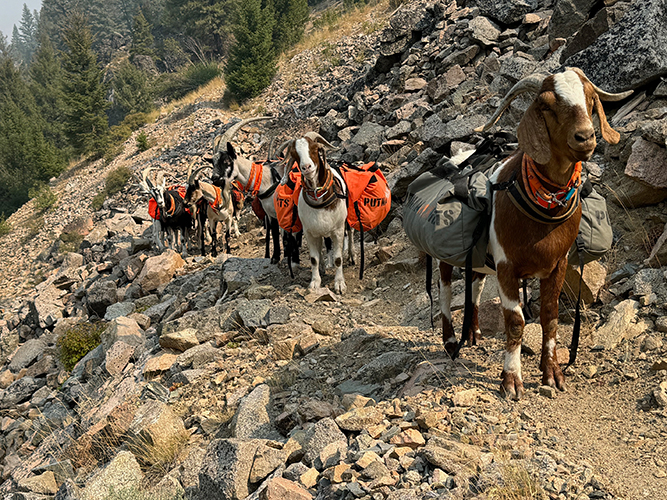
It’s sweltering out, entirely too hot for 9:00 in the morning, as I lead my goats over a loose section of scree that is our makeshift trail. We’ve been hiking for several hours, and this is just the start of our day. Rocks tumble down and splash into a raging creek below — a good snow year has caused the waterways to be engorged and stream crossings to be treacherous, forcing us to find alternative routes to bypass the worst sections. One missed step and a goat can be carried swiftly away, along with its cargo, so instead we scramble and climb, trading a dangerous and potentially deadly situation for what, at times, feels like an insurmountable effort.
Blaze ambles along behind me through the scree, a sure-footed packer with thousands of trail miles under his belt. He’s nine this year but has plenty of adventuring left in him, an old warrior in a young goat’s sport. He rarely takes the lead on our trips, but when other goats hesitate on rough terrain, he stoically pushes forward.
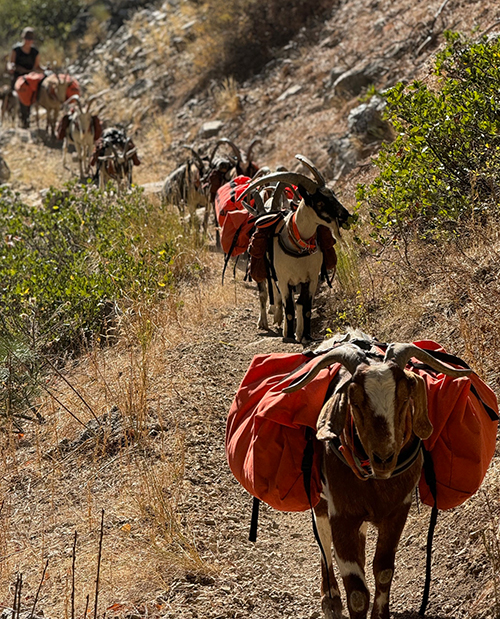
Summer is the goat packers’ time to shine, but it creates its own unique set of challenges. Heat is one of our biggest obstacles here in southern Idaho; temperatures during the day can quickly climb into the high 90s, and clouds are scarce. Packing up camp in the dark and pulling out at sunrise is the most efficient way to cover the bulk of our miles and keep the goats moving at a good pace before the afternoon heat catches up with us. If I notice my string starting to lag as the temperatures rise, it’s time to find a spot to settle in and rest. A telltale sign they’ve reached their limit for the day is when they linger at each bit of shade before the risk of being left behind forces them to move forward. When I can, I like to pick a nicely shaded spot along a stream to pass the afternoon hours while the goats lounge and forage, and then we’ll either continue for a few more miles in the cool of the evening or set up camp and spend the night right where we are.
On this particular day, I have a special destination in mind for our stopping point: a high mountain camp with a small trickle of a spring that produces a lush green patch with good forage near our camp. It’s a stark contrast from the blackened and scarred landscape of a recent wildfire that decimated this area a decade prior. These burn areas can be abundant with wildlife, such as deer and elk, and we are occasionally reminded of their presence by a buck rub or a wallow gouged out of the damp earth, where a bull has been rolling in mud to keep cool. One of the many benefits of not always sticking to trails is that we regularly come upon these spots, and I make a note of them if we plan to return during hunting season.
As we push through the early afternoon, I begin to notice the heavy breathing of a thoroughly worn-out string. With my rear goats starting to lag behind, I know that we’ll need to finish soon or prepare for a long layover this afternoon before pushing through at dusk.
Heat exhaustion can set in quickly, so we’re overly cautious about pushing through in the hottest part of the day. Eventually, the goats will quit completely, and any goat suffering from heat exhaustion will need thiamine, electrolytes, fluids, and rest for several days before they fully recover. This can quickly become an emergency situation in the backcountry that many are unprepared for, especially if you don’t have a medical kit or several extra days’ worth of supplies on hand.
One trick I’ve learned on the trail to help keep the boys well-hydrated is to pack a collapsible bucket and scoop it for them when we’re lounging in the shade on these long afternoon sits. They’ll drink from it more generously this way, and at times, it’s easier than getting down to water themselves. If you suspect your goat is overheated, place a damp cloth over its horns or around its neck while it rests. The horns act as a radiator for body heat, and the damp cloth will help cool them down more quickly. If you carry a drench syringe and some electrolytes, you can also make them a quick cocktail that will hopefully perk them up enough to get them out safely after a long rest.
As we sit during our break, I notice an unwanted hitchhiker crawling across one of their coats. I gently brush off the tick and then inspect the others to see if there are more. Typically, I find them nestled between the horns when attached, but in my experience, I’ve brushed hundreds of ticks off my packers, and fortunately, very few have been latched.
Depending on your location, tick-borne diseases are a concern, which can cause symptoms such as fever, encephalitis, and paralysis, so it’s best to be vigilant with preventive treatment. I apply a horse fly spray with a tick preventive before loading them up, which gets worked in as they jostle and bump into each other in the back of the truck. For extended trips, I bring a stick of War Paint insecticide, so I can reapply as needed. This also helps with flies and other biting insects that will terrorize your goats morning and night otherwise. Choosing exposed campsites with a good breeze, away from stagnant water sources, such as ponds and marshy areas, will also help reduce unwanted pests for your packers.
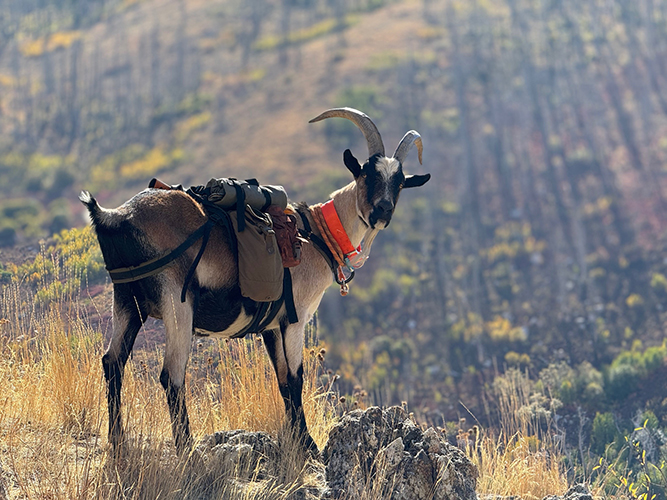
The last few miles of our hike are painfully slow, as we repeatedly stop and rest, typically 10 minutes for every hour of hiking, when I know they’re getting tired. The goats are showing signs of fatigue after a long day on the trail, but this is where good string management and really knowing the conditioning of your animals comes into play — knowing exactly how much you can ask of them without ever pushing them over their limits.
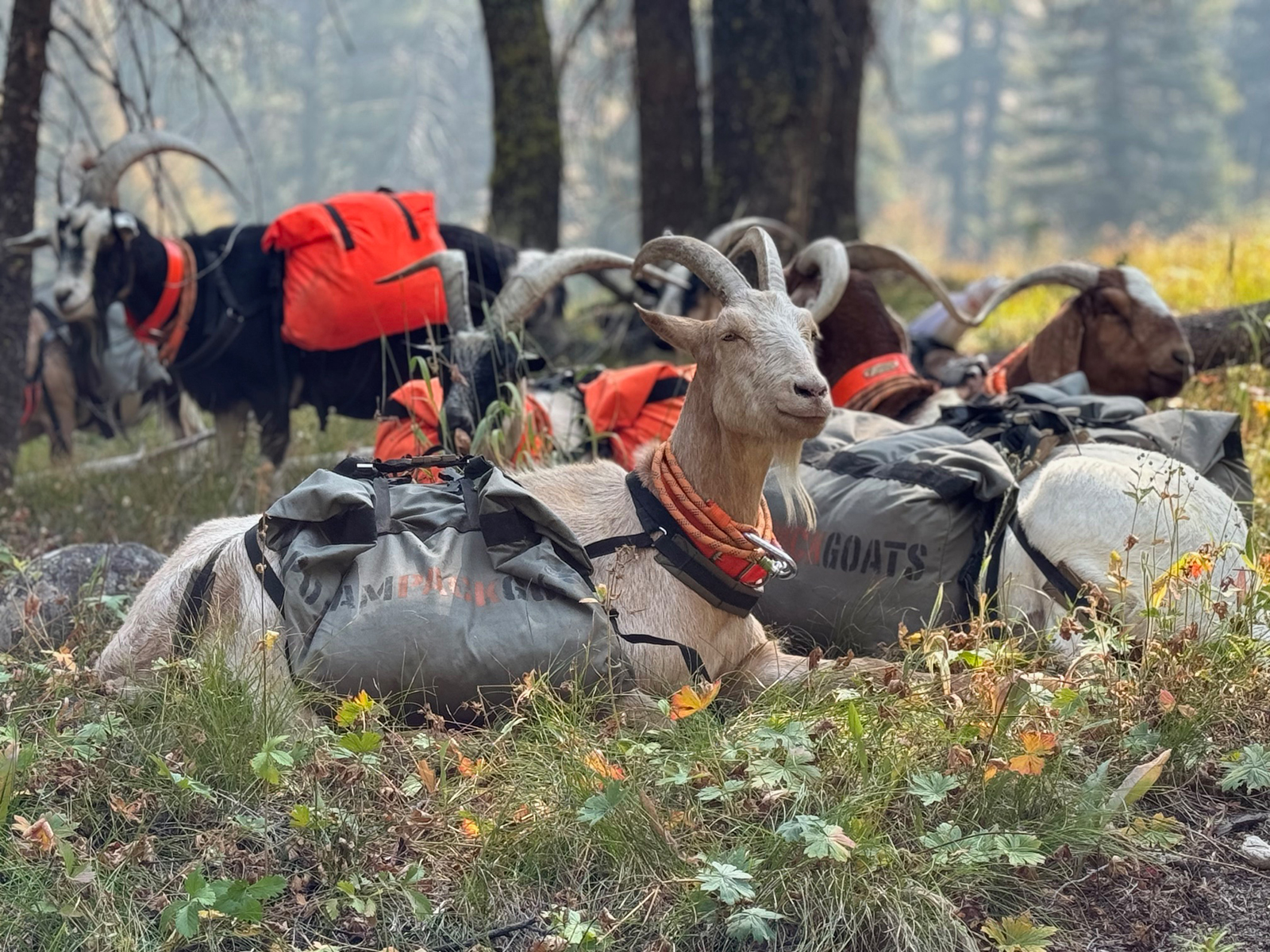
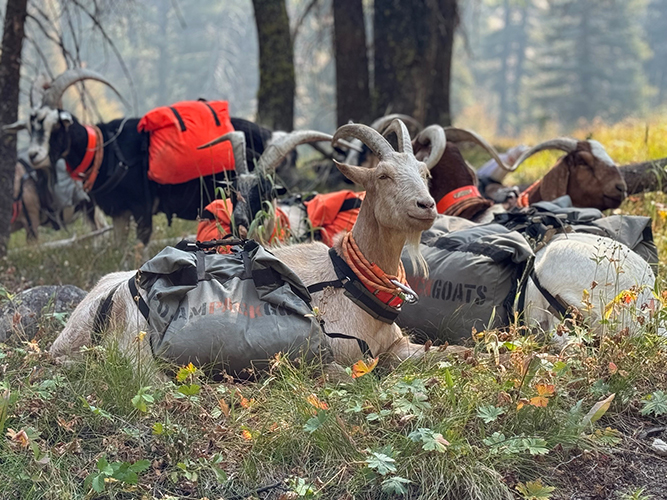
As we finally pull into camp, I begin to strip off packs as the stragglers make their way in. I will strategically place gear where I intend to set up my tent, to claim it for myself and to avoid the goats leaving me any “presents” as they linger around camp. Blaze finds a bit of shade to lounge in close by, eyes closed, casually chewing on his cud. A few of the younger goats have already sauntered off and begun their evening forage on the outskirts of camp, excitedly butting each other with newfound energy and sneaking in one last snack before I tie them out for the night.
Exhausted, I throw out a low line between two stands of buck brush and begin collecting goats, carefully placing them next to companions they will get along with and placing my troublemakers on the ends. Blaze is last, and I spend a few moments giving him extra scratches and sharing the last of my orange gummies with him, a welcome reward after a hard day on the trail.
NATHAN PUTNAM is a board member of the North American Packgoat Association. He and his wife, Jackie, own Putnam Pack Goats in Mountain Home, Idaho, where they breed SaberPine crosses and build pack goat equipment. They enjoy hiking and hunting in the Idaho backcountry with their goats. You can learn more about them at putnampackgoats.com or on Instagram @putnampackgoats.
Originally published in the July 15, 2025, digital issue of Goat Journal.