How to Tote Your Goat: Transporting Goats
Transporting goats without a livestock trailer.
Reading Time: 5 minutes
Goats are a common choice for many small homesteads in the United States, and as a source of meat and milk around the world. There are many reasons for this, often related to cost. Goats can graze on forage indigestible to cattle; they’ve been shown to gain more weight on pasture than cattle, and they require less land than cattle. However, there’s another benefit to goats over the larger ruminants that’s less often discussed: transporting goats.
Raising livestock means moving them. They need to be bought and sold, taken to shows, and perhaps transported to the veterinarian if yours doesn’t make house calls. They may need to be moved between pastures, which in the case of large farms can be quite a distance.
With horses and cattle, this necessitates an expensive livestock trailer and a truck capable of hauling it. For those with a smaller setup or limited finances, this may not be a practical expense. Livestock trailers are designed for larger animals and many lack dividers, resulting in smaller animals being clustered together in an open, moving vehicle. While horse trailers usually have dividers, they’re designed for horses, making these partitions impractical when transporting goats.
Keep It Simple — The SUV
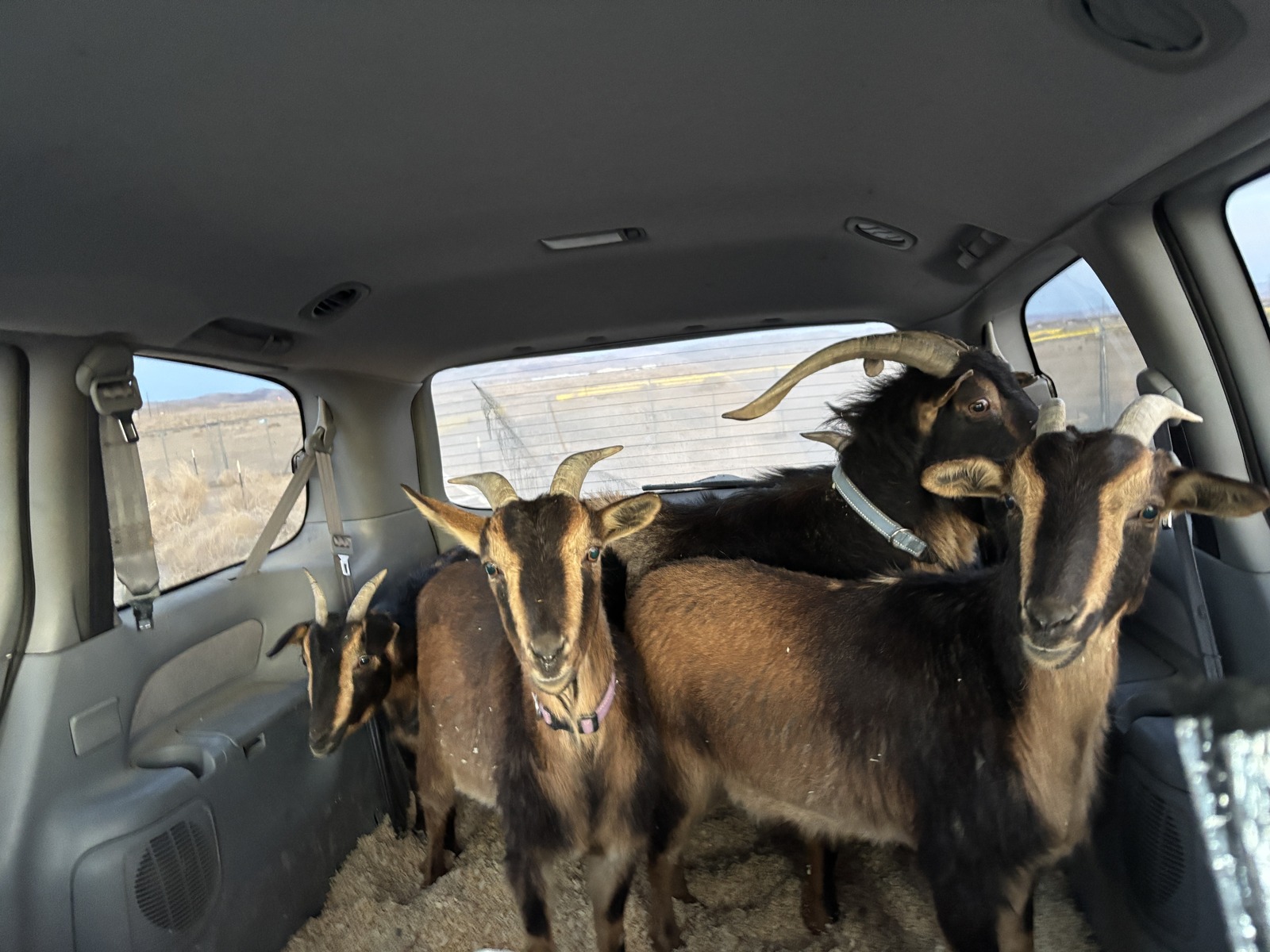
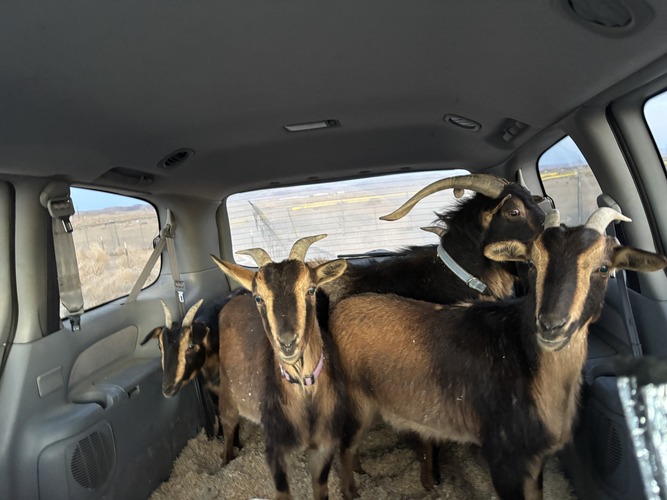
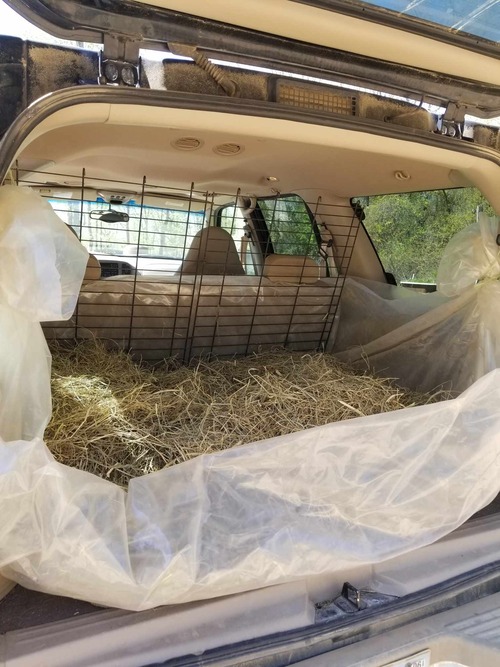
For smaller breeds, the easiest way to move a few goats may be in the back of the family car. Some breeders throw shavings or hay in the back of their car and report that their goats settle right in. Others put down plastic or a tarp first to make the cleanup easier — but some just take things as they come!
Using the family car, as opposed to an open pickup, might have the downsides of post-trip cleanup and a lingering barn smell, but it can make loading animals easier. The climate can also be controlled, whereas in the back of a pickup truck, a rainy drive can be uncomfortable for the animals, and a hot summer day could be deadly. Goats should never be transported in the open bed of a pickup. Always use crates, caps (toppers), or other containment.
Dog Gone It! — Using Dog Crates
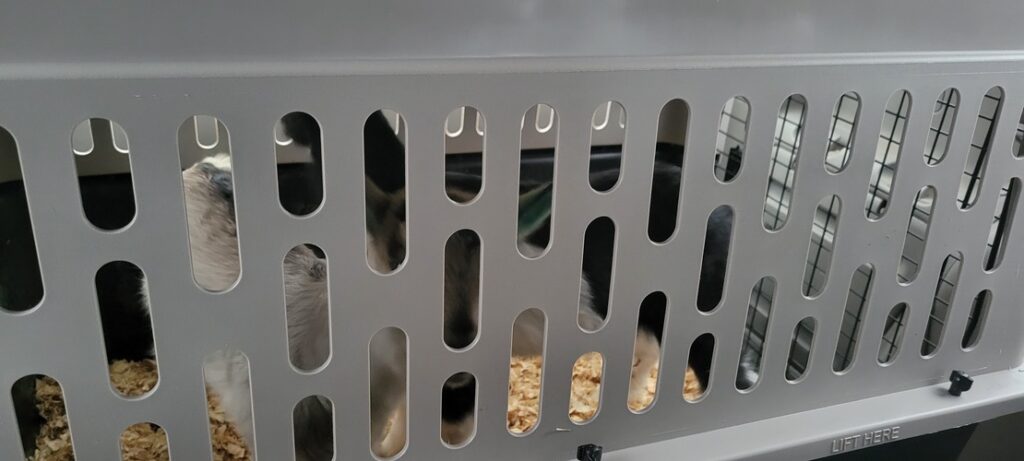
For smaller goats, an alternative option is to transport them in solid-sided dog crates. Used crates can be found inexpensively, and even new, can be found for about $100. Depending on the size of the goats, anywhere from 1 to 3 will easily fit in a 40-inch crate, and a Toyota RAV 4 will fit three crates, making the county fair season a breeze. A pickup, van, or box truck can easily accommodate multiple crates, allowing the movement of more goats without the risk of panic, fights, falls, or other injuries.
This is especially true if young goats are being transported and trampling is a risk. On our homestead, we raise San Clemente Island goats, and a mother and young will easily fit into a large crate, keeping them together while protecting the young from other, larger animals. In addition, on longer trips that require attention and watering en route, dog crates help contain animals while you care for them one or two at a time, reducing the chance of escape.
Picking Up — The Farm Truck
There are instances where a truck may be a more suitable option for transporting small ruminants. One may have too many animals to fit in a car, and a truck with a cap can accommodate more. This can run into similar issues as having animals loose in a livestock trailer, but it’s easier to check on them, realize if they’re in distress, and control temperatures if needed.
Larger animals may be impractical in a car. Some wethers can weigh 200 pounds or more and may not fit in a crate, and bucks may not be the kind of smell you want embedded in the interior of your car. Additionally, horns and windows may be a concern, or there may be too many human passengers in the car to accommodate four-legged riders.
The Stock Box
For those without a cap, there are other options for transporting goats in a pickup truck, some more practical than others. A livestock stock box is a steel or aluminum box with insulated sides and a roof. Different models have optional vents, windows, and even lights inside. They can be purchased to fit a five, six, or eight-foot truck bed. However, they’re extremely heavy; those built for pickups are often 240 pounds or more. This makes it impractical for many family operations without a lot of strong helpers or a forklift.
They’re also expensive. A new stock box can run around $4,500 — not much different than the price of a used horse trailer in some areas. One company sells a cage marketed as a more reasonable alternative, but it’s basically a large cage with no bottom and no built-in way to secure it. The cost is around $500, and it weighs approximately 150 pounds, making it a more reasonable option for short trips, but it’s unlikely to be safe for longer trips without modifications.
I’ve seen one enterprising gentleman who built himself a wooden stock box, but it was just that — a box. It didn’t have windows, vents, or lights, giving it few benefits over a truck cap. Still, for him, using it did the trick for transporting three goats for a few hours. Additionally, since moving animals sometimes involves only a short trip to transfer between fields, this or any stock box could easily be used with an ATV and trailer to transport animals where off-road travel is required.
Other Options
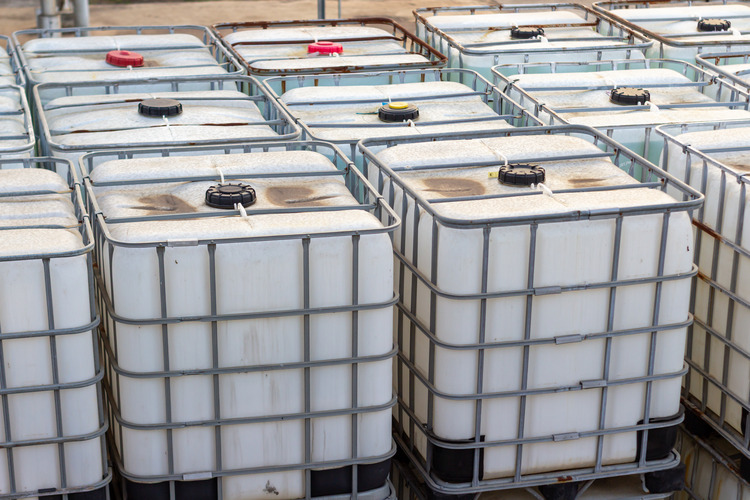
Modified farm totes can also be used. Some have built boxes for pickup beds that are covered on the back and enclosed with sturdy wire on the front, so the goats can get shelter if they want. If you have a larger bed or trailer without dividers, cattle panels can be used to make separate areas within the space.
Innovation
Innovation is often part of homesteading, and when it comes to transporting goats, this is no exception. Inexpensive, easy options can be built, purchased, or created, depending on your needs. It’s important to keep the safety of animals in mind when deciding how to move them, but one certainly doesn’t need to spend tens of thousands of dollars just to tote your goat.
SHERRI TALBOT is the co-owner and operator of Saffron and Honey Homestead in Windsor, Maine. She raises endangered livestock breeds and educates on heritage breeds, sustainable living, and the importance of eating locally.