From This Side of the Ring: Finding Success in the Showring
Reading Time: 5 minutes
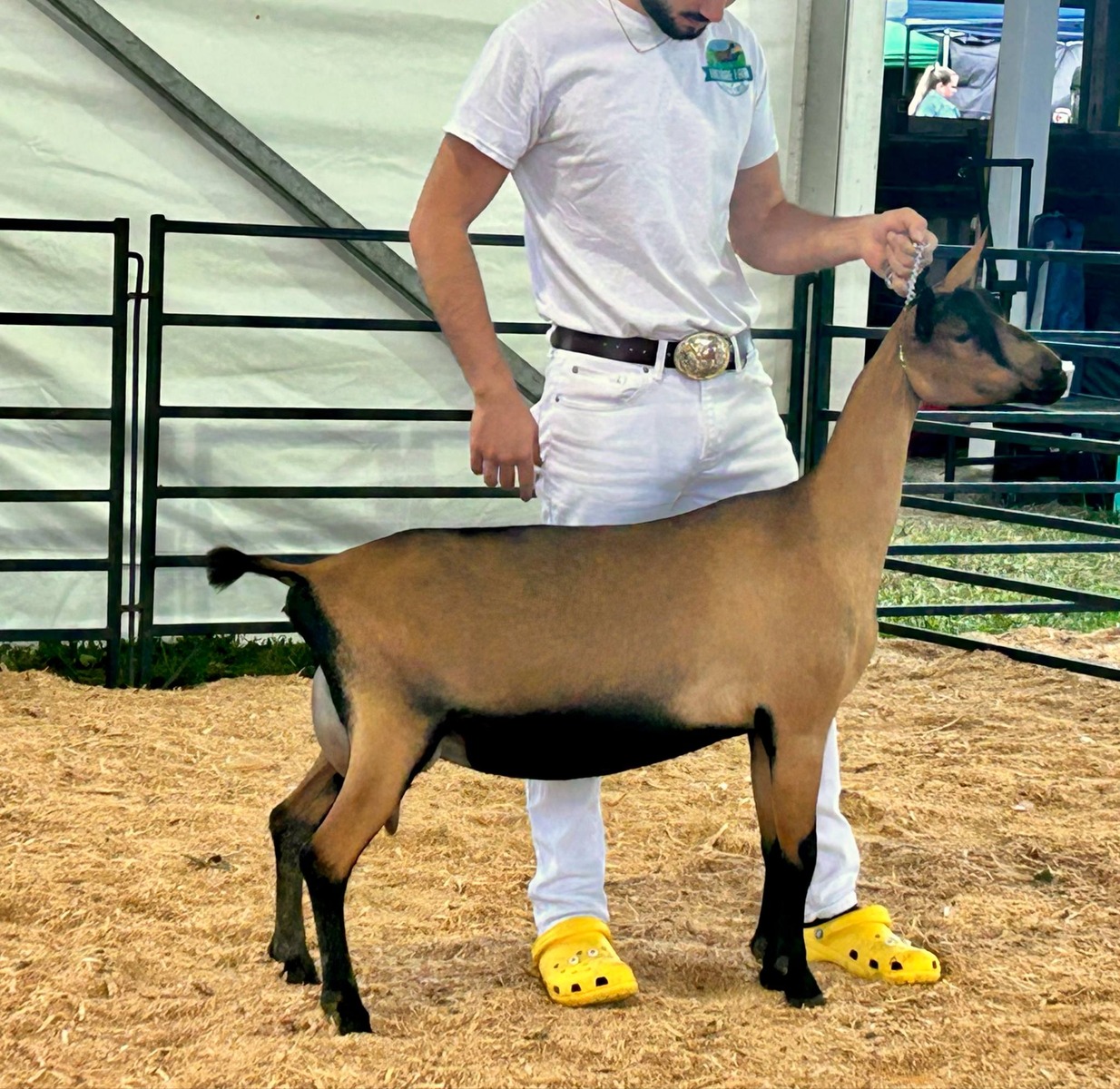
Hello readers. It seems the end of an era has come as Goat Journal won’t continue in the New Year. I’d thought about what last words of advice I had for you, and I just couldn’t pinpoint one topic, so I decided to share with you how we’ve found success with our herd of Oberhaslis in the show ring!
When we first started in dairy goats, we began with competitive goats for our area, but none that would win every show or even their class. We set a goal to be competitive at our local fair and to be in the running to win Grand Champion. Since that doesn’t happen by just looking up to the night sky and wishing upon a shooting star, we had to decide what would make an impact on our entire herd the quickest, and that would be a good buck!
A Good Herd Sire
A good herd sire can impact your herd quickly and consistently (good or bad) through his progeny. We purchased a buck from Morgan Allen of Haycreek’s Farm in Minnesota and had him flown into New York. The kids he produced were very nice. He improved their general appearance consistently. Those kids started earning us our first ribbons in the show ring, but we needed another buck to breed that progeny to, one to complement that general appearance while adding more consistent udders.
We added in our second buck from Ober-Boerd Dairy Goats in Ohio, which is known for not only excellent conformation but also the most consistent udders in the breed! That buck was the key and brought it all together for us. We started seeing excellent kids, and down the road, excellent mature does. I’d like to tell you that buying good bucks is the secret sauce to cooking up excellent goats, but it’s only one of the ingredients. Your husbandry needs to be really good as well.
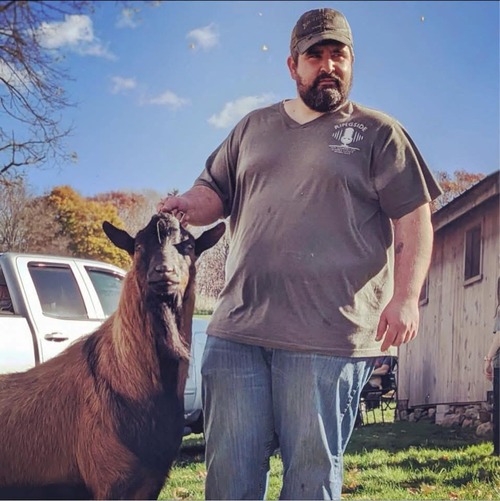
Photo credit: Jon Kain.
All the Little Things
Your goats need to be fed high-quality hay and grain, have their hooves trimmed regularly, and have their parasite load controlled. If their coats look rough, ensure they have the right minerals, and copper-bolus them when needed. The little things help make great goats even better! Get decent clippers to clip their hair for shows and practice clipping them in the warm months so they don’t look like patchy-haired rats at the show! Walk your goats on a show collar regularly to ensure they walk well in the show ring. Do the little things often, and you will see a difference in how your goats look. As we did the little things, we saw a difference in our program’s performance in the ring, but we wanted to be even more consistent. We wanted to do better.
Add to Your Doe Lines
We had a good doe herd, but we weren’t very consistent yet; for every good doe, it seemed we were selling two does that weren’t competitive in the show ring. It was time to add a fresh doe line. We looked at the does we admired most in the breed and contacted their breeders to place a reservation for a doe kid. The following spring, not only was the doe kid born, but we also purchased a dry yearling. Both have completed their permanent championships, and one became the 2024 ADGA Junior National Champion Oberhasli.
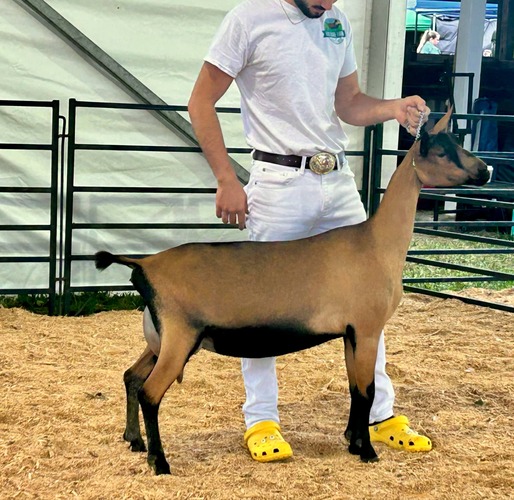
We’ve purchased two more bucks from that breeder as well. I say this all not to tell you to buy from the same breeder only, but to look at similar genetics of whichever breed you own, because when you’re linebreeding or breeding the same type of animals together, that’s when you get the consistency. When we decided we preferred a certain type and sourced from the same breeder or breeders with similar lines to add to our herd, the consistency of quality in the goats we bred improved significantly.
Good Lines Don’t Have to Break the Bank
We’ve consistently gotten animals that perform well in the show ring since we decided to add better genetics to our herd. By doing the little things, using good bucks, and purchasing good does, we’ve performed amazingly in the ring. We don’t go to shows expecting to win, but we walk away a little surprised if we don’t get at least one ribbon at a show. I know there are people reading this thinking, “We don’t all have infinite money to buy excellent goats.” That’s fine, neither do I. To put it in perspective, my first buck from Minnesota was $500, and my buck from Ohio was the same. The does were a little more expensive, but less than $1,000, if memory serves me right. There’s good genetics out there for reasonable prices; you just have to set a budget for yourself.
Set Goals
Every year, we set goals for ourselves that we make attainable. This past year, it was to finish the permanent championship of every senior doe in our barn, and we did it. It wasn’t easy, however, and I didn’t think it was attainable since one of those does was a one-year-old first freshener, but she’s a special doe, and she did it! It might’ve taken all show season, but she did it! Next year, our goal for the show season is to make the top 12 with every doe we bring to the ADGA National Show. It’s a lofty goal, but we’re hopeful.
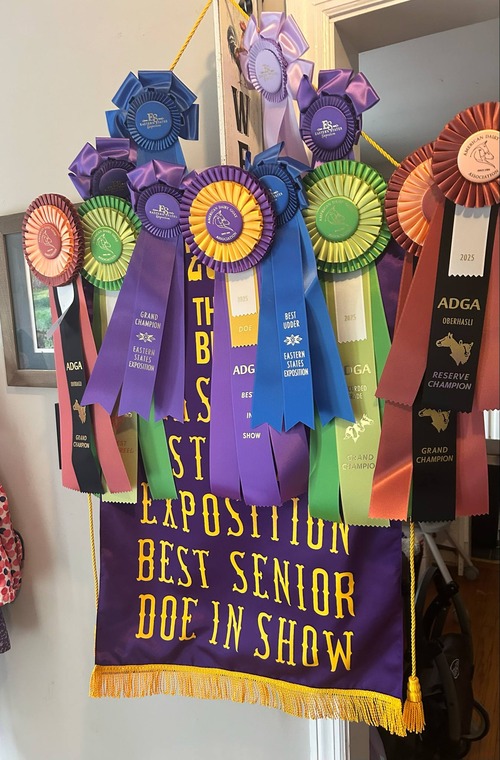
I always get asked how to do well in the show ring by followers of our herd, listeners of my podcast, and even a reader of this column. I’ve laid it all out here for you. We set a goal to be competitive in the ring, and we now routinely meet it by winning classes at shows and earning grand and reserve grand champion ribbons. Do the little things, be passionate, and work with consistent genetics. No need to wish upon a star when you have the answers. Now it’s time to roll up your sleeves and get to work.
Find Me Ringside
I’ve enjoyed my time writing for Goat Journal. I hope that if you’ve found my articles entertaining, you find your way over to “Ringside: An American Dairy Goat Podcast” to listen to me talk about our beloved goats endlessly. By the time this comes out, we’ll have published our 300th episode! Happy goating!
Jon Kain lives and breathes goats, literally. By day, he’s a superintendent of a goat and cow dairy. By “night,” he and his family raise a small herd of Oberhasli goats while chasing his 3-year-old daughter or talking about goats on his podcast, Ringside: An American Dairy Goat Podcast.