What to do When it’s Time to Dry Off a Dairy Goat
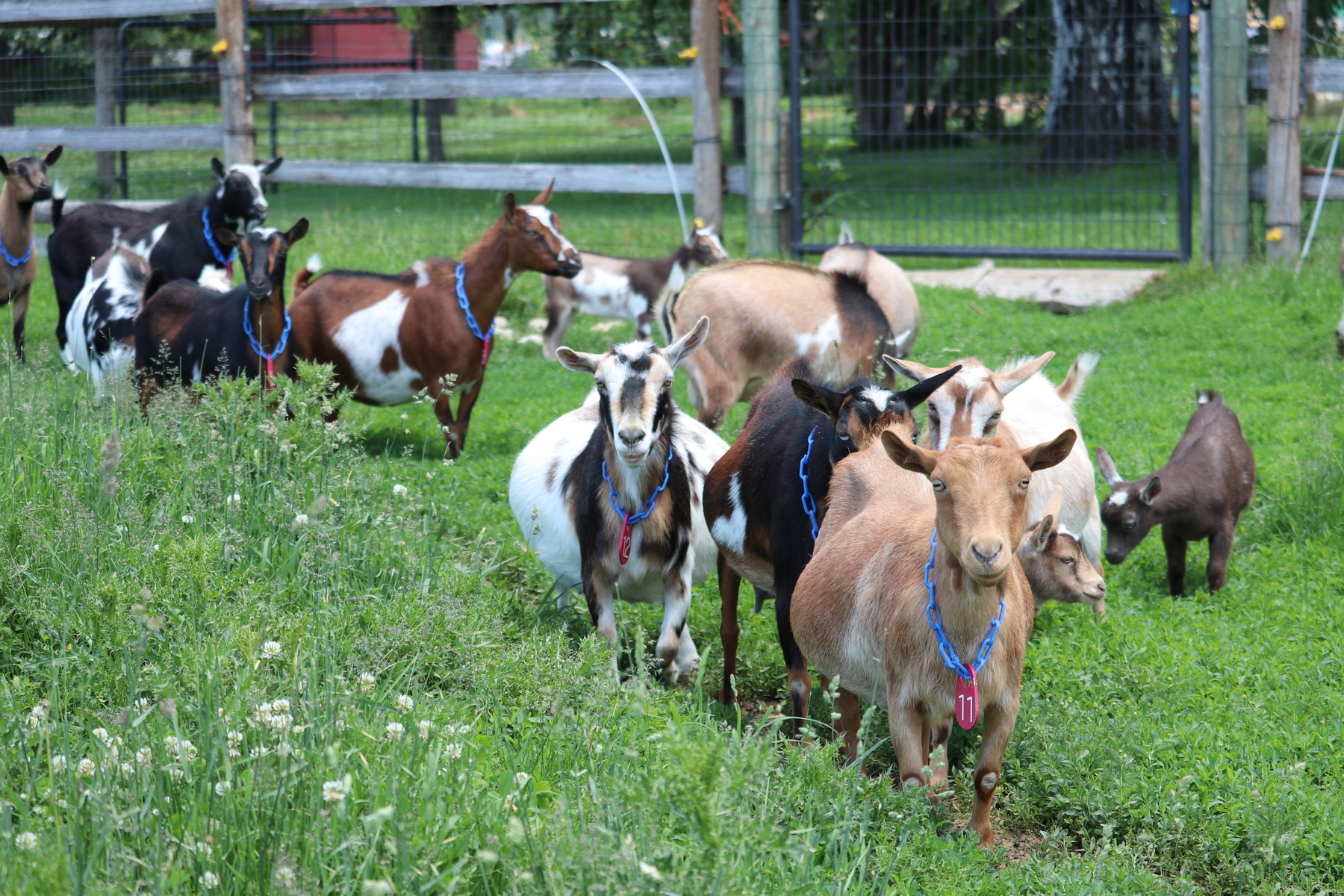
Drying off a doe is a routine part of herd management when you own dairy goats. Poor dry-off practices can harm or ruin a good milker, so learning how to properly dry off a dairy goat is important for your doe’s comfort, health, and future productivity.
Why and When to Dry Off
Dairy goats are bred for heavy, sustained milk production. Abruptly ceasing to milk a doe may cause her udder to become engorged with milk, which can result in tissue damage and mastitis. Therefore, a dairy doe, especially one at peak production or a persistent milker, must have her production worked down gradually before you can completely stop milking her. This decline and cessation of milk production is the dry-off process.

You can dry off the doe at any stage of lactation, although the longer she has been in milk, the easier it will be. It’s common to dry off a doe late in lactation when her production has naturally declined so much that it’s no longer worthwhile to milk her every day. Furthermore, though a pregnant doe in good body condition can be milked for about three months into her five-month gestation, she should be dried off during the last 6 to 8 weeks of gestation so she can concentrate resources toward supporting the rapid late gestation growth of her kids and repairing her mammary tissues in readiness for her next lactation.

It may take several days or weeks to slow the doe’s production enough that you can safely stop milking her. Therefore, if you won’t be able to milk her after a certain date — such as when you leave for vacation — remember to start drying her off a minimum of two weeks beforehand.
How to Dry Off a Dairy Goat
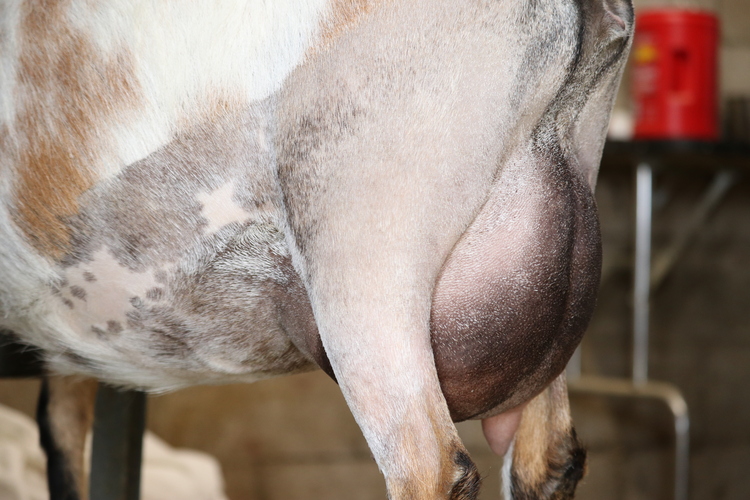
Dry off is triggered by the pressure of leftover milk in the udder, which signals to the doe’s body that the “kid” doesn’t need all the milk she is making. Her mammary glands then regulate production to meet the current demand. To begin this process, continue milking the doe on her regular schedule, but leave behind approximately one-third of the milk so her udder gets a little tight between milkings. However, if her udder becomes extremely taut, leave less milk until her production has dropped enough that you can leave more without overfilling her.


Extend the time between milkings once the doe’s udder feels relatively soft at each milking. I usually extend the time by 12-hour intervals because that works best for my schedule; therefore, if I milked every 12 hours, I would begin milking the doe every 24 hours after I’ve worked her production down enough that her udder can reasonably hold the amount of milk she produces during that time. I leave half the milk in her udder if it is still fairly soft after 24 hours. A doe in late lactation may be able to switch to a once-every-24-hours milking schedule almost immediately.

By the time the doe is worked back to milking every 48 hours, you typically need to milk her only once or twice more before you can completely stop milking. Milk out just enough to relieve the pressure. Watch her for a few days after you stop milking to ensure she doesn’t overfill. Her udder will be visibly flaccid at this point and will gradually shrink over several weeks.
If the doe is making under a third of the milk she produces at peak production, you might be able to skip these steps and dry her off cold turkey or with just one partial milk out 24 to 36 hours after the last complete milking. But keep an eye on her.
What to Feed During Dry Off
Since milk production requires significant energy input, reducing high-energy feeds in favor of a high-fiber diet encourages the doe to dry off. When feeding hay, minimize alfalfa and feed good-quality grass hay instead. Grass or weedy pasture is also acceptable. Although you shouldn’t limit the amount of roughage she consumes, the helping of grain she gets while being milked should be reduced by half.
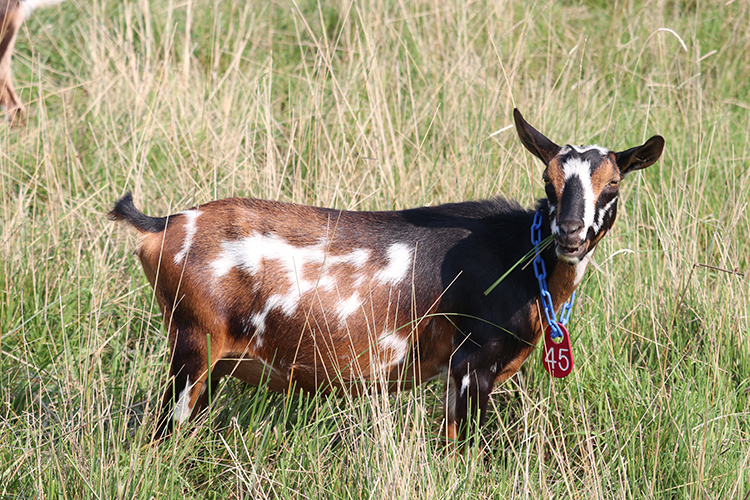
When you dry off a dairy goat, go easy on energy reduction during the dry off period if the doe is thin or in late gestation, as she can develop serious health issues if high-energy feed is completely eliminated from her diet. Just feeding her a little less grain is safer.
As soon as she has dried off, switch her to a life-stage appropriate diet. A healthy, dry doe that isn’t pregnant should have minimal legumes and grain to prevent her from getting fat. A pregnant doe (or one that will be bred soon) needs a higher concentration of energy and nutrients, so she will benefit from some legumes or grain.
Potential Problems When You Dry Off a Dairy Goat
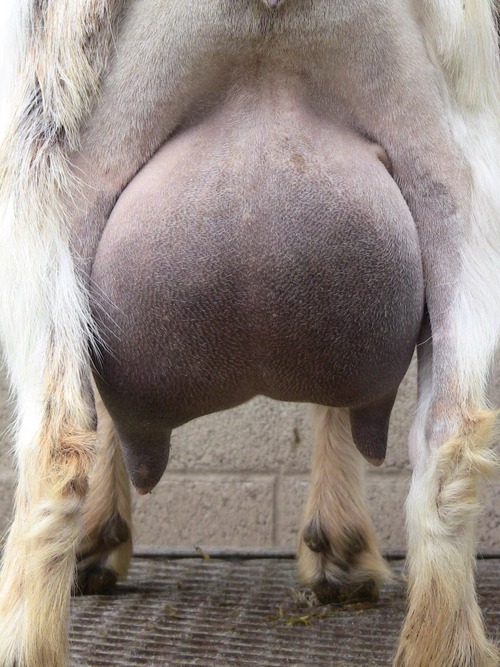
The most common issue you’ll run into while drying off a doe is that she gets too full of milk. An engorged udder is very taut to the touch, and the overfull mammary glands may give the skin a lumpy texture. Her teats will be stiff and may appear abnormally large. If she overfills too much, you might feel thickened, swollen sections in the skin of her teats and udder. Swollen skin usually heals once the pressure is taken off.

However, extreme engorgement can cause irreparable tissue damage that is detrimental to udder health and longevity. Blown teats, for example, is a condition where abnormal pressure destroys the milk retention structures of the udder. Blown teats are permanently distended with milk and develop thinned walls and other deformed structures that make them difficult to milk and put them at higher risk of injury and bacterial entry.
Finally, all that milk sitting in a tight udder can facilitate bacterial growth, so watch out for signs of mastitis during the dry-off period. A hot, hard, or tender udder, clumpy or bloody milk, and depressed behavior are common symptoms. Keep a California Mastitis Test in your veterinary cabinet to quickly check if you suspect mastitis.

Drying off is a natural part of the goat’s life cycle, so the process is usually uneventful. Given proper management, patience, and attention, your dairy doe will be ready for future healthy and productive lactations

REBECCA KREBS is a freelance writer who breeds registered Nigerian dwarf goats at Krebs Dairy Goats in the Rocky Mountains of Montana. She enjoys poring over pedigrees and participating in the DHIR milk test program. Find her farm online at www.Krebs.farm.
Originally published in the Winter 2024 issue of Goat Journal