“If only” – An Experience with Ringwomb
Reading Time: 5 minutes
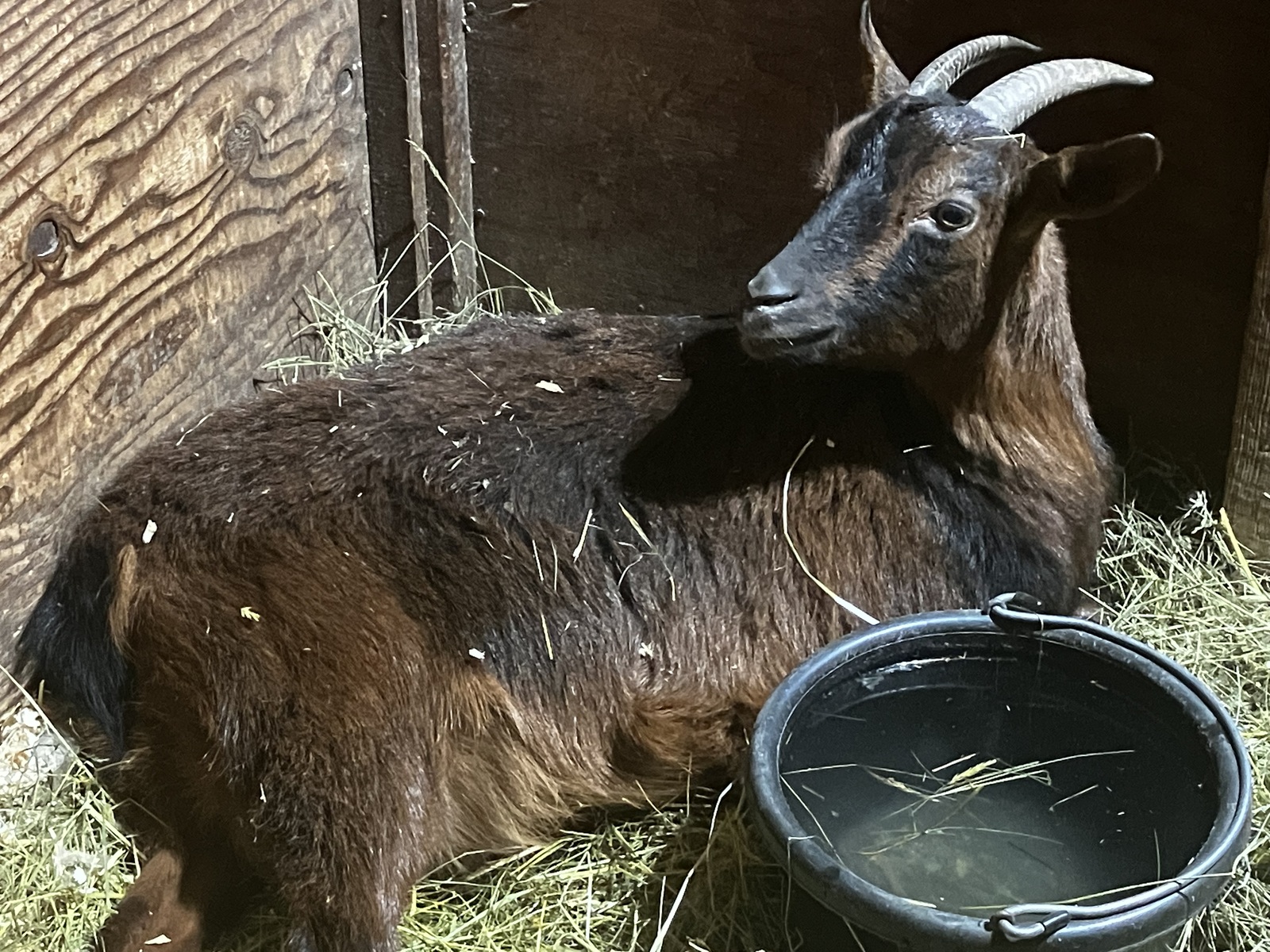
On March 19, 2023, my San Clemente Island goat doe, Sunflower, began to show signs of labor. She was a couple days earlier than expected, but within a reasonable timeframe. The previous year, she’d also been early and delivered healthy twins. She was our best doe, so we were very excited for her kidding. We were hoping for at least one girl to inherit her mother’s great conformation and udder.
By midnight, she was in full-on labor, and I knew something was wrong. The previous year, she’d delivered her twins in about 20 minutes, but this time, over an hour of contractions had seen no results.
At 3:00 a.m., I woke my husband, who helped me hold her while I did an internal exam. I have very small hands, but couldn’t make much progress. She appeared to be partially dilated, but not enough. At five in the morning, my husband called out of work, and I called the veterinarian. We met at the emergency clinic at 6:00 a.m.
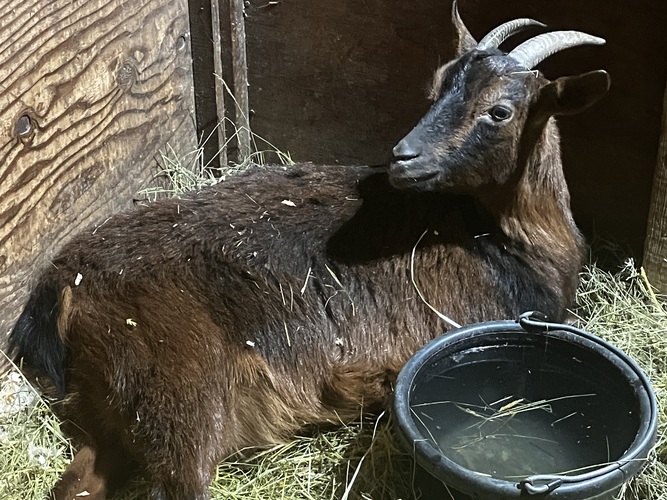
The vet initially supported my belief in partial dilation, but later changed her mind and said the doe wasn’t dilated at all. They did four ultrasounds before finding a kid’s heartbeat, and the vet decided Sunflower just wasn’t ready to deliver yet. She chalked the contractions up to a false start.
However, she also said she was tired from being on call all night and asked whether we would be willing to leave Sunflower with the day staff for evaluation. We did, and got a call two hours later with a diagnosis of ringwomb – cause unknown. Despite Sunflower’s previous easy births, there was no dilation of her cervix.
My choices were few:
- Have our best doe put down at two years old and lose both her and the living kid we knew was there.
- Try more inexpensive medications that would encourage contractions in the next 36 hours and maybe cause dilation. The kid would likely die, but Sunflower might be saved. The vet sounded doubtful.
- Have a very expensive cesarean section that would hopefully save the mother and the kid.
She was our best doe, but we didn’t have the money — a series of previous life issues had seen to that. Yet, what choice did we have? We agonized for an hour but eventually agreed to the surgery. We emptied what little money we had in our accounts and borrowed the rest. We made it clear we had $1,000 to our name.
Two days later, after her cesarean, Sunflower was home again. The doeling remained at the vet because she wasn’t suckling well, and they were worried about whether she would remain stable. The bill was $1,300. We borrowed more.
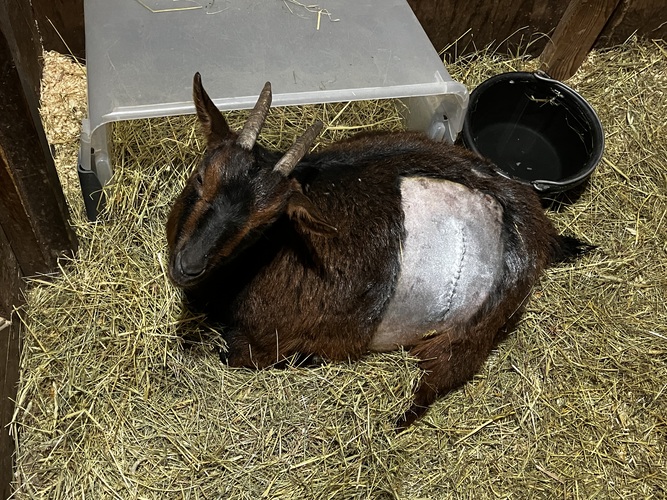
The goat I brought home wasn’t the doe I had taken in. She cried, moaned, and refused food. I had been told she wouldn’t produce milk, and when I looked, she had indeed dried up. Her wound was dry, and she didn’t have a fever. I could find no reason for her discomfort. I initially chalked it up to the surgery and perhaps poor pain management on the part of the veterinarian.
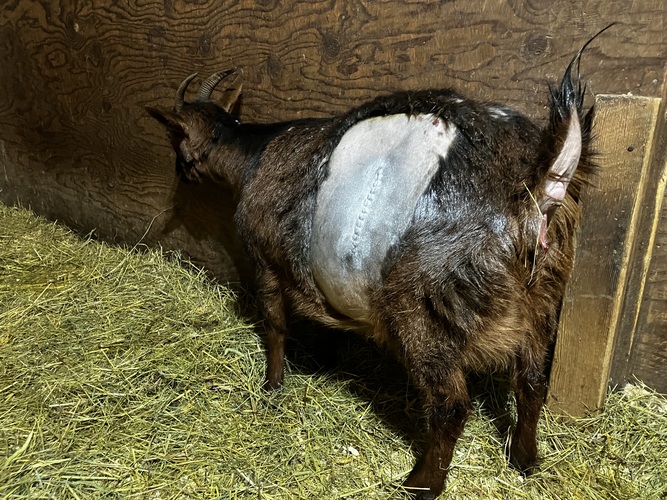
At four the next morning, she delivered a second kid. Despite taking four ultrasounds and being told we expected twins, the vet had missed it. The kid was long dead, which is probably why Sunflower hadn’t been able to dilate. Poor Sunflower still tried to clean it and called to it. I desperately wished I hadn’t allowed the vet to keep the living doeling, so Sunflower could have nursed her.
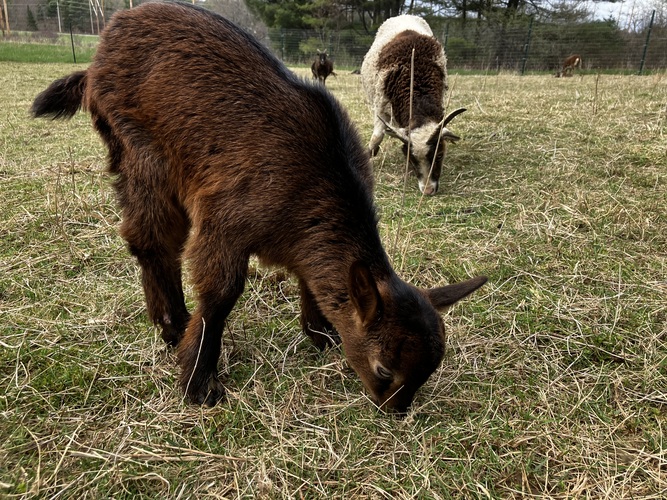
That would be the first in a long line of “if onlys” I would wish for in the days to come.
I contacted the surgeon, and was assured Sunflower would be fine; she was already on an antibiotic, and that should deal with any additional infection that might occur. For a few days after the delivery, Sunflower seemed better. She ate a little, drank plenty, and I could take her out of her stall and walk her every afternoon. Meeting back up with her buddy, Petal, and Petal’s new kids seemed to perk her up quite a bit. Her temperature remained good, and her wound dry.
Then she stopped eating. She drank regularly and would lick at her minerals, but wouldn’t eat any food. We tried baby food, fruits, greens of all kinds, and nothing interested her. When, after several days, she ate a handful of rabbit grain, we were thrilled, thinking we had turned the corner. Frustratingly, the next day, a similar attempt resulted in her spitting it out. We tried numerous rumen supplements and other methods to jump-start her digestive system, to no avail.
Multiple calls to the vet got us nowhere. The surgeon continued to insist Sunflower would be fine — her appetite was probably low due to the surgery. She refused to see Sunflower without charging us, despite having missed the second kid that was likely causing these complications. Of course, we had no money since the veterinarian had already charged us more than quoted. Our savings were depleted, and we couldn’t borrow any more. I protested that her error should entitle us to at least a free follow-up, and I was told veterinary work wasn’t like human medicine. She didn’t “deal with the billing” and “I just work here.”
Sunflower continued to get weaker, and her udder began to look swollen. We called the vet again and requested antibiotics. The veterinarian stated she was probably just inflamed and should be seen. I agreed to bring her in, but since they couldn’t see her for several days, I requested medication until they had an opening. They agreed.
Unfortunately, the medication was too late, and by the next day, she was dead.
We made the best decisions we could under the situation at the time. It’s hard, though, with so much hope placed on an animal, and so much emotion and grief when in the situation. Years later, I’m still angry and guilty about the entire scenario, and the “if only” remains.
If only I had trusted my observations more.
If only I had gotten a second opinion.
If only I had been more attentive, faster responding, had more money, argued with the veterinarian more, or had a more expansive goat aid kit.
If only.
SHERRI TALBOT is the co-owner and operator of Saffron and Honey Homestead in Windsor, Maine. She raises endangered livestock breeds and educates on heritage breeds, sustainable living, and the importance of eating locally.