


How Long do Goats Live?
Checking into Goat Lifespans
Reading Time: 6 minutes
When you consider adding goats to your life, this piece of information is important. Asking how long do goats live, brings answers about how to plan for your goat’s lifespan. Baby goats are adorable. Often, we make impulsive decisions about bringing home cute baby livestock. When we stop and consider what the adult animal will require and how long we will need to provide for a healthy life, we set up for a good experience.
Proper and appropriate care for the animal is the key to a healthy, long life. Not only quality feed, but the right amount of feed is one factor. Goats are ruminants and require daily available forage. The forage can be in the form of grazing plants such as pasture, or rough weeds, leaves, tender branches, and wild plants. Most goats prefer to browse rather than graze on well-tended pastures.
Providing the Correct Environment
Housing should be considered. While goats are hardy little ruminants for the most part, they do not tolerate wet weather as well as cattle and sheep. Providing shelter for all animals is important, but for goats, it’s necessary. A three-sided run-in shelter will suffice if a barn is not possible. If you will be breeding, investigate a goat shelter where you can give new mothers a chance to bond with their kids without being interrupted by other herd members. Providing shelter for your goats will help them enjoy a longer, healthier lifespan.
Keep in mind that goats are herd animals. Having one goat rarely works out happily for the goat or the humans. A solitary goat may spend much of its time trying to escape to find a herd. Be prepared to house and care for at least two and preferably three goats.
Goat Maintenance- Keeping the Goats Healthy and Strong
Routine goat maintenance is important to the health and longevity of your goat. Hoof care and proper goat hoof trimming allow your goat to walk without pain or inflammation in the hoof. If you can’t perform the hoof trims yourself, you will need someone to do it for you.
Health maintenance should be carried out on a routine basis too. This may include vaccinations or health checkups. If you will be breeding, selling kids, and showing goats there are some vaccines that are mandatory. When keeping a closed herd on your own property, you may choose herbal preventatives for certain internal parasites. My recommendation for using herbal prevention is to make sure the goat is clean of a parasite load before beginning a prevention routine. Gathering a fecal sample and having it checked for parasites will give you the answers you need to get the goats healthy.
The Importance of a Good Breeding Plan
Breeding stock also determines the possible lifespan of a goat. No matter what breed of goat you choose, having a healthy doe and a healthy buck is the best start. Breeding only animals that exhibit a strong, healthy appearance leads to healthier kids. A weak or health-compromised doe is more likely to produce weak kids. These weaker kids are more likely to have a shorter lifespan.
Quarantine is another often overlooked practice that can affect the longevity of your goats. When a new goat arrives on your property, keep the animal housed separately for 30 days. This will give any contagious diseases and parasite issues time to develop in the newcomer. Then you can treat any issues without exposing your entire herd to a health problem. Even perfectly healthy-looking animals can carry disease to a new herd.
Looking at the Teeth for Determining Goat Age
There are a few methods of estimating a goat’s age. One method is to examine the teeth. Keep in mind that goats only have teeth along the front bottom. They do not have upper front teeth. If a goat is older than, say, 10 years, it may have begun to lose a tooth here and there. A normal adult goat’s mouth has eight lower front teeth. As the goat ages, the teeth will show signs of wearing down from eating. The teeth may begin to spread out slightly. The type of vegetation the goat eats will play a part in the wear on the teeth.
Goats younger than five will have six permanent teeth along the bottom front. After age four, the goat should have all eight permanent teeth. Estimating a goat’s age by looking at the teeth may give you a ballpark range of the animal’s age.
Animal Conditioning Scores Can Provide Clues to Goat Age
Animal condition also gives us an idea of animal age. Young mature animals have more muscle and are rounder in the hips and neck area. Each breed may have its own way of assessing body condition scores based on breed standards. If the herd generally has a good body condition score and one animal has a lower score, it may be older and not digesting grain and forage efficiently.
Admittedly, body condition scoring can be low if an animal is young but not well-cared-for and not receiving adequate nutrients and health care. An older animal will look aged, may be weaker, and not quick to get up. Arthritis may be present in the leg joints, causing an uneven gait.
How Long do Goats Live? Age Span by Breed
Each breed will have outliers, those goats that surpass all the expected norms of a goat lifespan. Generally, healthy does are expected to live 11 to 12 years. If a goat is still being bred after age 10, the likelihood of a pregnancy related death is more likely. Does that retire earlier in life can have a longer life expectancy.
Wethers live longer than bucks with an 11 to 16-year life span. Bucks that live past the age of 10 are unusual due to the stress of rut.
Age by Breed
- Alpine goats, an extremely hardy and weather tolerant breed has a life expectancy of 8 to 12 years.
- Angora goats typically live over 10 years if they receive good care. It is not uncommon to have an angora goat live into its teens. That’s a lot of mohair production!
- Boer goats often have a longer life due to their natural resistance to disease. Bucks have an expected life span of eight to 12 years and does have a surprising expected life span of 12 to 20 years.
- Kiko goats are a hardy, large meat breed. Since they are disease and parasite-resistant, they often live over the life expectancy of eight to 12 years.
- LaMancha goats are usually kept as a dairy breed. They have a shorter life expectancy of seven to 10 years.
- Myotonic goats, or fainting goats as they are commonly called, appear fragile but are actually a long-lived, hardy breed. Myotonic goats can live 15 years.
- Nigerian Dwarf goats are found on many small dairy farms. The superior milk production and quality from this small goat make them a frequent choice. The life expectancy is 15 years
- Nubian goats are known to be a vocal breed of goat. Get the earplugs ready for a good 15 to 18-year lifespan.
- Oberhasli goats are a smaller breed, handy to have around for pasture cleanup! They live approximately eight to 12 years.
- Pygmy goats are a popular breed for small homesteads. Expect to have the goats for 12 years.
- Pygora goats are a fiber breed derived from a careful breeding system using white angora goats and purebred pygmy goats. The life expectancy easily reaches into the teens so expect to have your Pygoras 12 to 15 years if they remain in good health.
- Saanen goats are a heavy milk-producing breed. Their high production requires increased protein. If nourished well,Saanen goats can live past 15 years.
- Toggenburg goats are friendly and curious, often kept as both pets and dairy suppliers. The life expectancy of a Toggenburg is 8 to 12 years.
Two from the Breed Watch Lists
Two other breeds of interest are the Spanish goat and the Guernsey goat. The pure Spanish goat is a landrace breed. They are hardy and adaptable, often described as being long-lived. Since pure Spanish goats are rare in the United States, it is hard to find a lifespan range.
The Guernsey goat is a small to medium dairy goat breed. The breed is distinguished by its golden color and skirt of long hair. Although popular in other regions of the world, not many Guernseys populate the United States dairy goat world.
If you’re wondering how long do goats live before you decide to add them to your farm, as you can see, it’s a commitment of over a decade of care. Goats offer companionship to people and other animals, milk, mohair fiber, meat, and kids for sale.
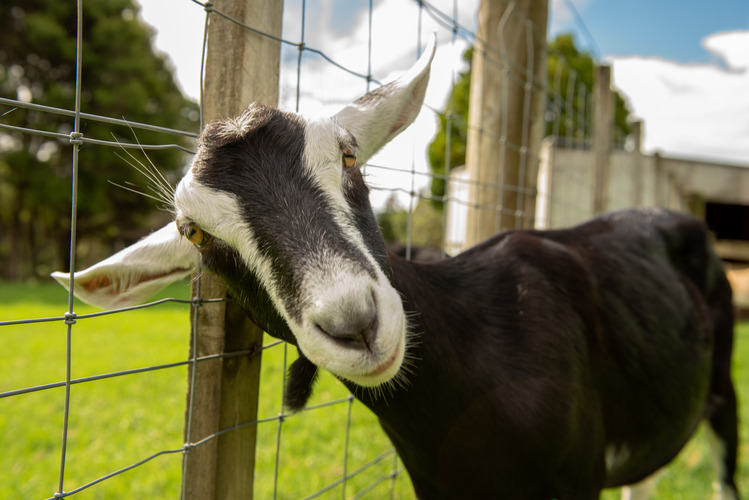
These sweet animals are eager to contribute to the farm in other ways such as clearing land, cleaning up poison ivy, and don’t forget the entertainment factor. Given proper care, goats will give back to your farm or family homestead for many years.
Have you had long-living goats? How old and what breed were they?
Originally published in the November/December 2019 issue of Countryside & Small Stock Journal and regularly vetted for accuracy.







Great article, Janet!
I have discovered that as my Nubian herd reaches old age (14 plus), and they begin to look a bit bony, having their teeth floated increases their food intake and restores their condition.
I queried my vet about tooth condition as I raise horses and llamas whose teeth often require floating in old age and I thought goats might also benefit from dental work. She said many animals including goats in zoos frequently have teeth floated, but most breeders never request this. It has added years to my goats’ lives.
When we were on O’ahu visiting family, we went to the Sweetland Farm; my daughter, Grandchildren and I spent the day there, and returned twice in fact; the goats were so calming. We’re still fascinated!
Hello,
I found this article on goat lifespans to
be quite informative and comprehensive. It’s impressive how the
lifespan of a goat can vary greatly depending on the breed,
with some, like the Nigerian Dwarf and Nubian goats, living up
to 15-18 years. Proper care, including a balanced diet, suitable shelter, and regular health check-ups,
can significantly extend a goat’s life.
I also appreciate the mention of goats being herd animals.
Keeping at least two goats together is important for their social well-being and
can prevent them from trying to escape in search of companionship.
The information on estimating a goat’s age by examining its teeth
and body condition was particularly interesting.
It’s a practical method for those who may not have detailed
records of their goat’s birthdate.
Overall, this article serves as a great reminder of
the commitment and care required when bringing goats onto a
farm. They offer companionship, milk, fiber, and meat, and with proper care, they can contribute to a farm for many years.
Thank you for sharing this insightful piece.
Best regards.