Are Alpine Ibex Goats Becoming Night Owls?
Beating the heat may have detrimental consequences for Alpine Ibex goats.
Reading Time: 4 minutes
As a group, the Caprinae subfamily, to which both goats and sheep belong, has been documented in the fossil record dating back 15 to 18 million years. Both goats and sheep were domesticated around 10,000 years ago. Goats are hardy creatures, known for thriving in conditions and places where other animals would struggle. Their resilience makes them an excellent species to study in terms of behavioral adaptations to climate change on the planet.
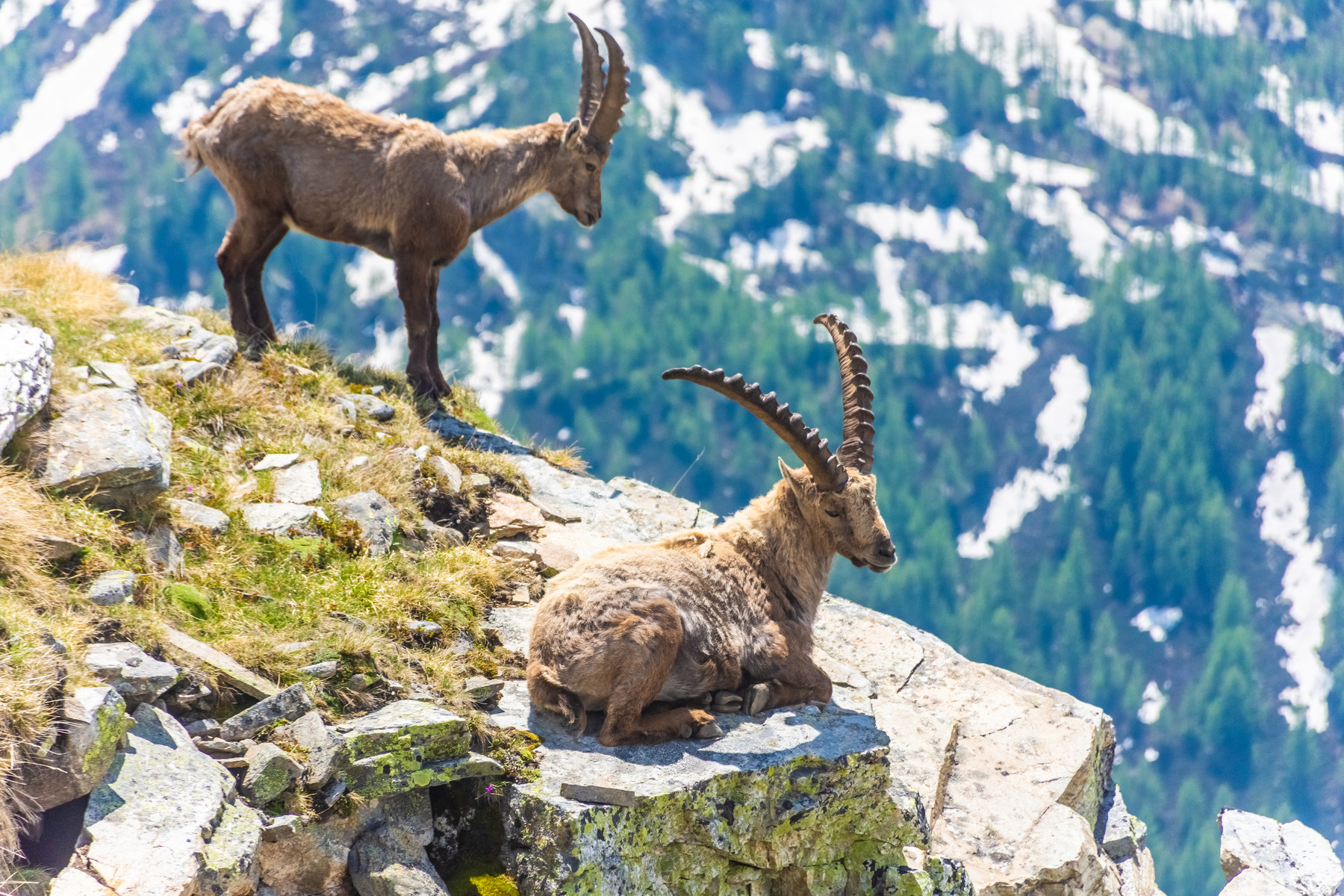
By the end of the century, the Alps are expected to be several degrees hotter on average. This temperature increase is having a profound effect on the goats that live there. According to a study by the University of Sassari and the University of Ferrara in Italy, Alpine Ibexes are adapting by foraging at night to avoid heat stress.
This radical change in their feeding habits seems to be a prime example of the resilience and flexibility of these goats. Following an extended hot weather stretch, goats will switch up their routine and become more nocturnal to seek food sources.
However, there are problems with Alpine goats adapting to a nocturnal lifestyle. By becoming night foragers, they’re more vulnerable to predators, which are more active at night. The goats have evolved to move through the difficult terrain of the Alps during the day. Their limited vision at night makes it harder for them to see predators and to navigate their habitat. Despite these challenges, the goats are making it clear that the increased danger is worth the relief from the warmer temperatures.
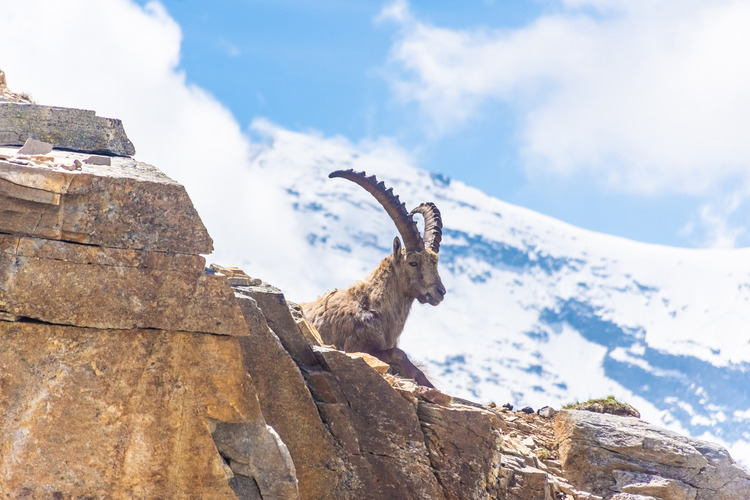
Stefano Grignolio, assistant professor at The University of Ferrara in Northern Italy, says, “For this species to be nocturnal is a problem — it’s a big problem. Nighttime foraging can result in reduced dietary efficiency, increased anti-predator protective behavior, and reproductive problems, which could lead to population decline.”
Additionally, according to new research from Durham University, Alpine goats appear to be, on average, shrinking in body size due to the heat stress. The research team went through years of weight records provided by hunters. Despite the warming trend, the forage hasn’t been affected nutritionally, and the team at Durham believes the size reduction is due to the change in the goats’ behavior in response to the heat. Since they’re adapted to thrive in cold weather, the recent warming of their foraging range in the mountains has driven them to rest more and eat less during the day, which appears to be reducing the body mass of new generations by up to 25% of those of the same age in the 1980s, despite foraging more at night.
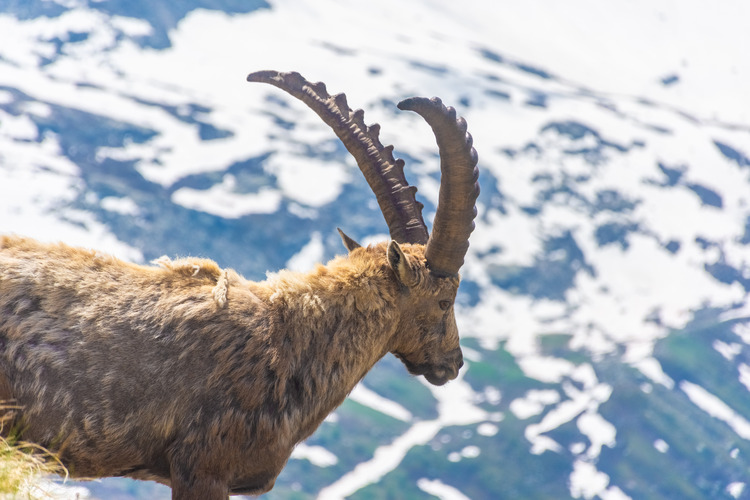
This creates another problem for the Alpine ibex. While a lower body mass makes it easier to withstand rising temperatures during the summer, if the winters remain as cold as they’ve been in the past, the goats may not be able to retain enough body heat to survive.
There’s no doubt that ocean temperatures are warming and weather patterns are changing. Whether Alpine ibex will be reduced in numbers by hungry predators, continue to struggle with foraging for food at night, or evolve into “nocturnal dwellers,” or adjust to higher daytime temperatures is yet to be determined, but there’s little doubt that climate change is testing the survival strategies of wildlife. These strategies will likely go on to affect more than ibex, as the hunting patterns of the predators and even the growth patterns of the vegetation may change with them. If the nocturnal pattern continues, even researchers will have to alter their monitoring programs since they’ll no longer be able to use daytime visual surveys.
ANITA B. STONE is an eco-friendly journalist who nourishes her traditional habit of nature and horticulture. Her love of the land and passion for teaching at the local community college and at senior retirement centers fill her time. She is always searching for new methods to improve the environment, grow food that benefits people, domestic animals, and wildlife. She is an author and master gardener in North Carolina, teaching others how to farm sensibly, making life easier and more fulfilling, and admits that she will always stay young at heart, just like her grandchildren.
- Seeking temporal refugia to heat stress: increasing nocturnal activity despite predation risk Published:17 January 2024. https://doi.org/10.1098/rspb.2023.1587
- Research Center for the Alpine Ecosystems – Climate Change and its Impact in the Alps. https://creamontblanc.org/en/climate-change-and-its-impacts-alps/
- Tom Mason, Marco Apollonio, Roberta Chirichella, Stephen G Willis, Philip A Stephens. Environmental change and long-term body mass declines in an alpine mammal. Frontiers in Zoology, 2014; 11 (1): 69 DOI: 10.1186/s12983-014-0069-6
- Durham University. “‘Shrinking goats’ another indicator that climate change affects animal size.” ScienceDaily. ScienceDaily, 21 October 2014. www.sciencedaily.com/releases/2014/10/141021111456.htm
- Walker, MD. 2024. The Hoofed Animals of the World. Sicklebrook publishing; Sheffield,UK.
- Subfamily Caprinae – Sheep, goats, and relatives. www.ultimateungulate.com/Artiodactyla/Caprinae.html
- Environmental change and long-term body mass declines in an alpine mammal. https://frontiersinzoology.biomedcentral.com/articles/10.1186/s12983-014-0069-6
- The Marmolada Mountains: climate change drives the ibex to move https://www.unipd.it/news/marmolada-mountains-climate-change-drives-ibex-move
- This Species Is Slowly Becoming Nocturnal for a Very Disturbing Reason. www.sciencealert.com/this-species-is-slowly-becoming-nocturnal-for-a-very-disturbing-reason
Originally published in the October 1, 2025 digital issue of Goat Journal.