Featured Stories
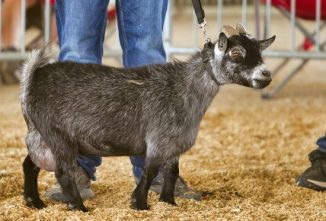
Registering Your Goat
Goat registries are very beneficial when you want to have the best of a particular breed. Find a list of goat registries here.
Read More

Back from the Vet: Caseous Lymphadenitis in Goats
Insidious diseases such as caseous lymphadenitis are having increasing ramifications for health and production within herds. In order to appropriately manage a goat herd for this disease, it is imperative to understand the disease process as well as the current diagnostics available.
Read More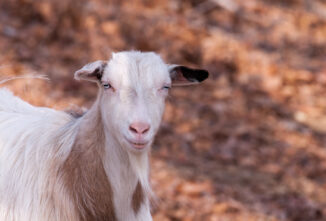
Hermaphroditism and Polled Goats
Hermaphroditism is not uncommon among goats, especially dairy goats of Western European descent. Before people realized the correlation between goats being polled and possible hermaphroditism, rates were as high as 6-11% of goat herds in the U.S in the early 20th century.
Read More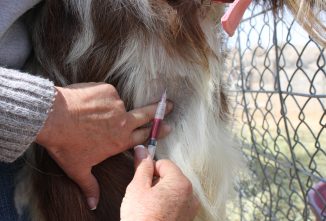
Goat Blood Testing – A Smart Move!
What is goat blood testing, and why should you do it? Where can you find goat testing lab and how do you know what goat diseases to test for?
Read More
A Story of Urinary Calculi
Chip was standing very still and “looked sick.” He would also occasionally strain, as if he were sneezing but without the sneeze part. He had urinary calculi.
Read More
How to Treat Goat Diseases and Illnesses Naturally
When it comes to goat diseases and illnesses, there are many ways to care for dairy goats naturally, without chemical intervention.
Read More
Caseous Lymphadenitis (CL)
Caseous lymphadenitis is a chronic, contagious bacterial infection characterized by abscesses near the lymph nodes, usually on the neck or near the udder. Commonly found in goats and sheep, and sporadically in horses, cattle, camelids, swine, fowl, and even people. Two forms of the disease include the external (skin) form and the internal (organ) form.
Read More
Caprine Arthritis and Encephalitis (CAE)
Caprine arthritis and encephalitis is a viral infection often manifested as arthritis in adult goats and, less
commonly, as progressive inflammation of the brain (encephalitis) in kids. Most often found in dairy goat breeds and sometimes in sheep.

Geissebei Trekkinggeissen
While goats are part of the Swiss cultural heritage, for decades they were called “the poor man’s cow.” Not as prevalent as cows, they are gaining popularity with the increasing demand for goat cheese and goat products.
Read More
7 Easy Recipes for Making Goat Cheese
Getting started making goat cheese? Try these recipes first!
If you’ve never made cheese, start with the quick & easy cheeses that need minimal equipment and ingredients and are ready to eat fairly quickly.
Read MoreGoat Journal has Transitioned
Goat Journal Lives On with Countryside & Small Stock Journal
Goat Journal is no longer available as a standalone subscription, but its spirit and expertise live on within Countryside & Small Stock Journal. When you subscribe to Countryside, you also gain full access to Goat Journal's website and archive as a bonus — every article and back issue, plus members-only Goat Notes and more! And with Countryside as your guide, you’ll have the knowledge you need to live a more self-reliant, satisfying life.
- Raise healthy animals from pasture to plate
- Grow and preserve the most nutritious food for you and your family
- Cook simply and naturally
- Build things yourself and take pride in your handiwork
- Treat ailments naturally and take control of your own health and longevity
- Fix what is broken so you get the most out of your investments
- Create your own certainty in an uncertain world
- And more!

Canadian Subscribers • International Subscribers
Canadian subscriptions: 1 year (includes postage & GST)