Featured Stories

Causes of Hair Loss in Goats
Hair loss in goats can be unnerving. Reasons can fall into several categories. Knowing the facts may make identification less frustrating.
Read More
Transgenic Goats Saving Children
Housed at the University of California-Davis campus you will find a small herd of goats that have been genetically altered to produce milk that is rich with the enzyme lysozyme.
Read More
Flavor Infusions for Goat Milk Cheeses
Whether you’re making soft or hard goat milk cheeses, sometimes you want to spice things up a bit with some different flavors, textures, and colors. There are a number of ways to add flavors to cheeses to make them even more festive and delicious.
Read More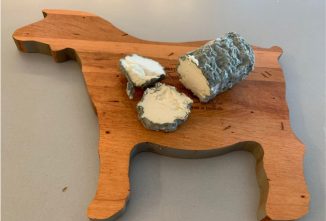
Goat Blue Cheeses!
I find there is something extra special about pairing the complexity of goat milk’s flavor with the richness of a good blue mold. The two blue cheeses here are among my favorites.
Read More

The Heritability of Udder Traits
Many udder traits are hereditary. Ideally, selection occurs when choosing a buck and doe for breeding. Neither should have undesirable traits.
Read More
Bucks with Udders!
Yes, you read that right! Bucks can have udders. Some even produce milk! While it may seem unsettling, it isn’t new or even rare.
Read More
All About Goat Testicles
Testicles make a buck a buck. The testicles produce testosterone and sperm, and the correct testicle anatomy comprises two equal-sized testicles in a single scrotum.
Read More
Breed Profile: Golden Guernsey Goat
The Golden Guernsey goat is an economical and friendly backyard dairy goat, hardy to damp, cool, and windy conditions, giving milk that’s great for cheese and yogurt.
Read More
What is a Certificate of Veterinary Inspection?
Are you planning to sell goats to a farm in another state? Transporting the herd as part of an out-of-state move? Attending a livestock show far from home? You will likely need a certificate of veterinary inspection.
Read More
Miniature Goats in the City
Goats aren’t just country creatures anymore. A growing number of Americans are bringing pygmy goats into their city plots.
Read MoreGoat Journal has Transitioned
Goat Journal Lives On with Countryside & Small Stock Journal
Goat Journal is no longer available as a standalone subscription, but its spirit and expertise live on within Countryside & Small Stock Journal. When you subscribe to Countryside, you also gain full access to Goat Journal's website and archive as a bonus — every article and back issue, plus members-only Goat Notes and more! And with Countryside as your guide, you’ll have the knowledge you need to live a more self-reliant, satisfying life.
- Raise healthy animals from pasture to plate
- Grow and preserve the most nutritious food for you and your family
- Cook simply and naturally
- Build things yourself and take pride in your handiwork
- Treat ailments naturally and take control of your own health and longevity
- Fix what is broken so you get the most out of your investments
- Create your own certainty in an uncertain world
- And more!

Canadian Subscribers • International Subscribers
Canadian subscriptions: 1 year (includes postage & GST)